Choosing socks for children in summer isn't just about matching clothes; it's also about protecting their delicate feet in hot and humid environments. Because children have a faster metabolism and a dense distribution of sweat glands on their feet, socks with poor breathability can easily cause sweat blisters, itching, and even odor.
I. Material Selection: Moisture Absorption and Breathability are Paramount
In summer, the material of socks directly determines how dry the feet stay. Parents should prioritize natural fibers or high-performance synthetic fibers:
- Combed Cotton: This is the top choice for children's socks in summer. Combed cotton fibers are longer and more uniform, resulting in a smoother feel, better sweat absorption than ordinary cotton, and less prone to pilling even after prolonged wear.
- Bamboo Fiber: Possesses natural antibacterial and bacteriostatic properties. Its cross-section is filled with fine pores, making it more breathable than pure cotton. Socks made of bamboo fiber have a cooling effect, making them ideal for children who tend to get hotter.
- Linen/Tencel Blend: These materials have excellent thermal conductivity and sweat-wicking properties, earning them the nickname "natural air conditioning" among fabrics, effectively keeping feet cool.
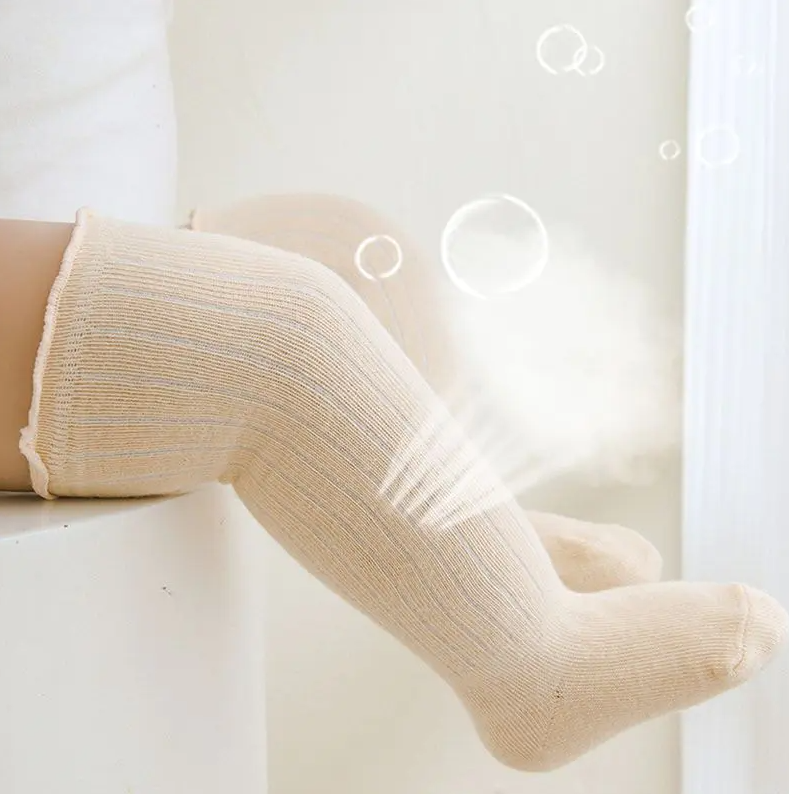
II. Structural Design: Mesh and Seaming Techniques
Details determine the wearing experience of socks, especially important for summer styles due to their physical heat dissipation structure:
- Breathable Mesh Structure: High-quality summer socks typically feature a large area of diamond or honeycomb mesh on the instep, which allows for rapid heat dissipation through air convection.
- Hand-stitched Seamless Toes: Choose socks with neatly stitched toes (simulating hand-stitched seams) to avoid protruding seams rubbing against children's delicate toes and reducing discomfort during activity.
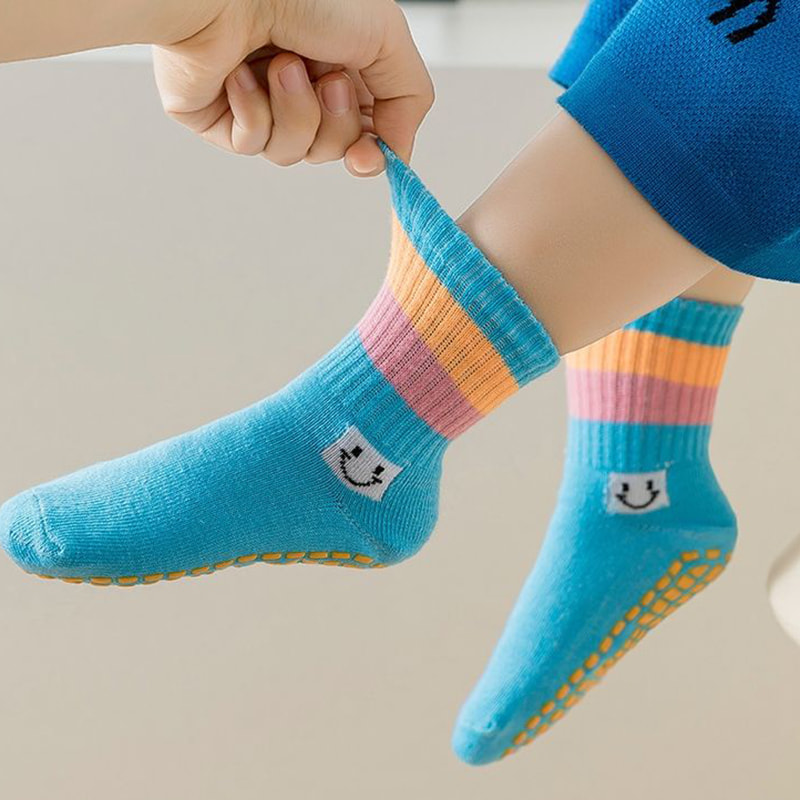
- Arch Support and Reinforcement: For active children, sports socks with micro-compression design on the sole provide better support and prevent the socks from slipping inside the shoe.
III. Sock Selection: Flexible Matching Based on the Scene
Different sock lengths serve different functions in summer, and should be selected according to the day's activities:
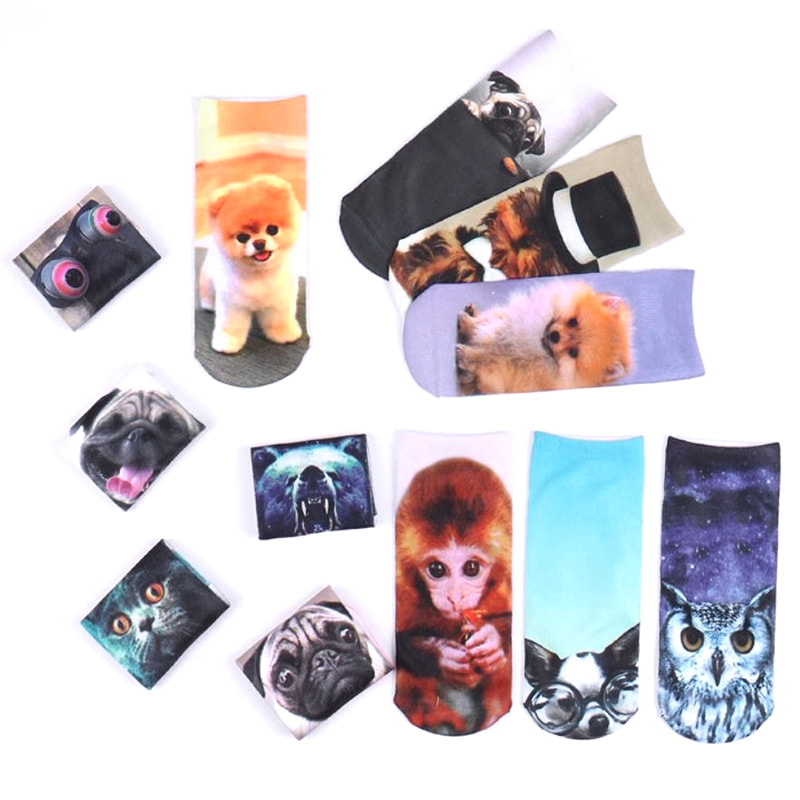
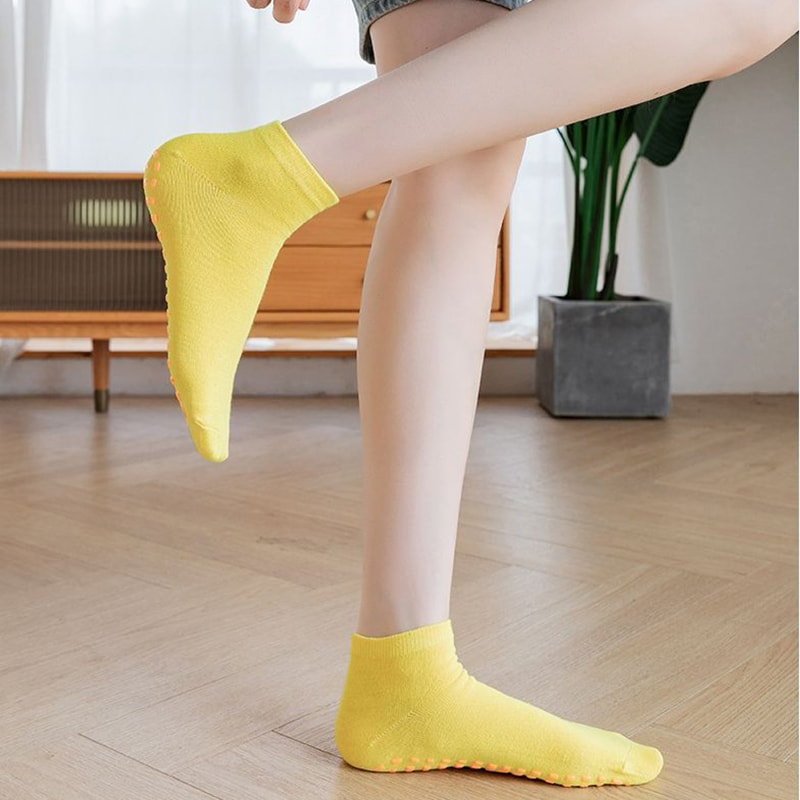
- Invisible Boat Socks: Suitable for pairing with low-top sneakers or canvas shoes. The ankle-revealing design is not only aesthetically pleasing but also maximizes exposed skin area, reducing stuffiness.
- Mid-Calf Mesh Socks: If children are playing outdoors in grassy areas, mid-calf length is recommended. The lightweight material wicks away sweat while preventing insect bites or scratches from grass.
- Long Socks for Air-Conditioned Rooms: In air-conditioned rooms, appropriately long cotton socks can prevent ankles from getting cold and help balance body temperature.
IV. Color and Safety: Health is More Than Just Feel
When purchasing summer socks, color and safety details should not be overlooked:
- Light Colors Preferred: Choose white, beige, light pink, or light blue. Light colors absorb less heat and contain fewer chemical dyes, making them more gentle on sensitive skin.
- Moderate Elasticity: The elasticity of the sock cuff should be just right. Socks that are too tight can affect blood circulation and leave deep marks; socks that are too loose will cause them to slip down frequently, affecting walking safety.
The best socks for children in summer should have four characteristics: high cotton/bamboo fiber content, lightweight mesh, seamless feel, and light colors. Parents are advised to change their children's socks 1-2 times a day to ensure their feet are always clean and dry.



 English
 中文简体
中文简体 Español