In modern life, whether you're a white-collar worker sitting for long periods in the office, a service industry worker standing for long periods, or a frequent traveler, leg soreness, swelling, and even prominent veins are becoming increasingly common.
I. The Core Principle of Pressure Socks: Gradient Compression
To understand the uses of Pressure Socks, you first need to understand how they work.
Pressure Socks are not ordinary tights; they use "gradient compression" technology. Simply put, the pressure is greatest at the ankle and gradually decreases upwards. This design acts like an invisible "pump," applying external pressure to the muscles to help venous blood overcome gravity and flow back to the heart more smoothly.
II. Main Uses and Benefits of Pressure Socks
1. Prevention and Improvement of Varicose Veins
This is the most well-known use of Pressure Socks. For patients with early-stage varicose veins, long-term wear of medical-grade Pressure Socks can effectively relieve heaviness in the lower limbs, prevent further damage to venous valves, and avoid worsening of the condition.
2. Reduce Lower Limb Edema
Prolonged sitting or standing can cause blood to pool in the lower limbs, leading to swelling in the ankles and feet. Pressure Socks reduce fluid leakage by squeezing the interstitial spaces, making them a preferred physical therapy for relieving leg edema.
3. Prevent Economy Class Syndrome (Deep Vein Thrombosis)
During long flights or extended periods of travel, limited space and slow blood flow greatly increase the risk of deep vein thrombosis (DVT). Wearing travel Pressure Socks significantly reduces the risk of thrombosis, ensuring travel safety.
4. Assist in Athletic Performance and Recovery
Many professional athletes also wear sports Pressure Socks (or compression sleeves). They reduce muscle vibration during exercise, decrease fatigue, and accelerate the clearance of metabolic waste (such as lactic acid) after exercise, shortening the recovery period.
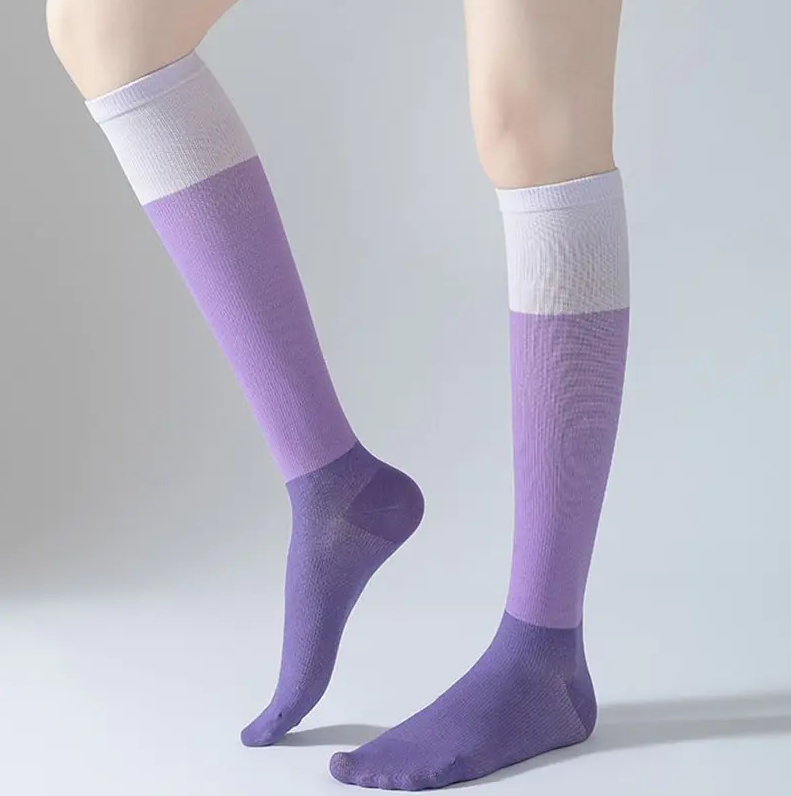
III. Which Groups Need Pressure Socks Most?
If you belong to any of the following groups, understanding the uses of Pressure Socks will greatly benefit your health:
- Office Workers: Teachers, nurses, chefs, and others who stand for long periods, as well as programmers, accountants, and others who sit for long periods.
- Pregnant women: Increased blood volume during pregnancy and compression of pelvic veins by the uterus make them highly susceptible to leg swelling and varicose veins.
- High-risk patients: Obese individuals, those with a history of thrombosis, or patients who have recently undergone surgery and require prolonged bed rest.
- Frequent travelers: People who frequently travel long distances by plane or train (over 4 hours).
IV. How to Choose the Right Pressure Socks?
After understanding the purpose of Pressure Socks, choosing the correct compression level (usually measured in mmHg/mmHg) is crucial for ensuring effectiveness. You can refer to the following three levels based on your leg condition:
Level 1 Low Compression (Preventative: 15-20 mmHg)
This is the entry-level compression best suited for ordinary office workers and long-distance travelers. If you simply want to relieve leg soreness after prolonged sitting, prevent mild edema, or protect muscles during daily exercise, this level provides a comfortable fit and can be purchased without a doctor's prescription.
Level 2 Medium Compression (Therapeutic: 20-30 mmHg)
This level is mainly for people who have already experienced early symptoms. If you notice prominent "spider web"-like blue veins on your legs (early stages of varicose veins), severe lower limb edema in late pregnancy, or have recently undergone minimally invasive surgery, level 2 Pressure Socks provide stronger support and effectively prevent further deterioration of the condition.
Level 3 High Compression (Enhanced: 30 mmHg and above)
This falls under the strict category of medical rehabilitation. It is mainly used to treat severe post-thrombotic syndrome, severe lymphedema, or intractable lower limb ulcers. Due to the extremely high pressure, these Pressure Socks must be used under the guidance of a professional physician; self-medication is not recommended.
Special Reminder: Pressure Socks are not "the tighter the better." Incorrect pressure levels may be counterproductive. Especially for those with skin inflammation, severe diabetic foot, or arterial occlusive disease, please consult a medical professional before wearing them.
They are not only medical devices for preventing varicose veins but also everyday essentials for maintaining lower limb vascular health in modern life. Through scientific physical compression, they help our legs say goodbye to "heaviness" and regain lightness and vitality.



 English
 中文简体
中文简体 Español