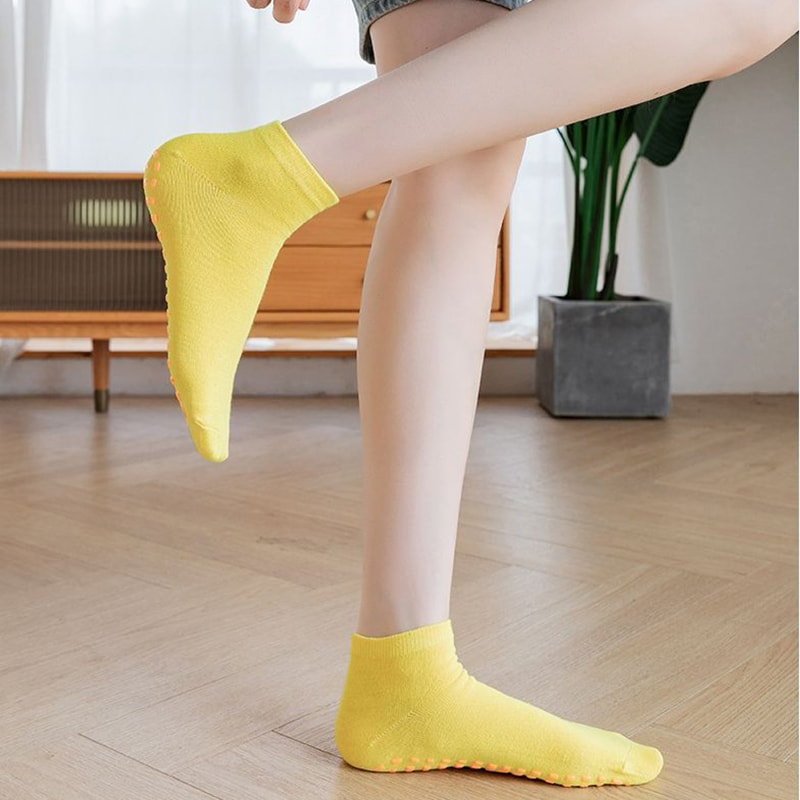
Compress Socks are highly effective in preventing varicose veins, relieving leg swelling, and promoting blood circulation. However, many people use them improperly, which not only fails to achieve the desired therapeutic effect but may also damage the skin or blood vessels.
To ensure the health of your legs, here are some key behaviors to avoid when wearing Compress Socks.
1. Avoid wearing them while sleeping.
For most users, Compress Socks are designed for daytime activities. When you walk or sit for long periods, gravity causes blood to pool in your lower limbs, and Compress Socks help blood flow back through gradient pressure.
Risk: When lying down to rest, the body is parallel to the ground, and the effect of gravity is reduced. Continuing to wear Compress Socks at this time may lead to excessive obstruction of blood flow to the legs.
Recommendation: Unless specifically instructed by your doctor for particular postoperative recovery, please remove them before going to bed.
2. Avoid rolling up or folding the top of the stocking.
Many people habitually roll up the top of the stocking because they feel it is too long. This is one of the most serious mistakes when wearing Compress Socks.
Risk: The rolled-up edge can create a "tether" effect, generating excessive localized pressure, which can actually block blood circulation and cause redness or pain.
Recommendation: If the stockings are too long, choose a size that better fits your leg length, ensuring the stocking surface is smooth and snug.
3. Avoid forcing them on when your legs are wet.
If you have just showered or applied oily lotion, putting on Compress Socks immediately will be extremely difficult.
Risk: Forcibly pulling can easily cause the elastic fibers in the stockings to break, shortening their lifespan; at the same time, wet skin has high friction, which can easily cause chafing.
Recommendation: Ensure your legs are completely dry. If you have used body lotion, wait for the lotion to be fully absorbed before putting them on. Using a professional stocking pusher or wearing rubber gloves can make adjusting the position easier.

4. Avoid pulling directly.
Compress Socks have a very high elasticity coefficient. If you pull on them from the top like you would regular stockings, it will cause uneven pressure distribution and may even tear the fabric.
Risk: Fingernails or jewelry can easily snag expensive medical Compress Socks.
Recommendation: Use the "flip-over method": first turn the stocking inside out to the ankle to secure the foot, then push it up in sections to ensure even pressure distribution.
5. Avoid Exceeding the Lifespan
Many people believe that as long as the stockings aren't torn, they can be worn indefinitely. In fact, the core value of Compress Socks lies in their "gradient pressure."
Risk: With frequent washing and stretching, the elastic fibers will gradually age. Compress Socks that have lost their pressure will no longer have the function of treating varicose veins or reducing edema.
Recommendation: It is generally recommended to replace Compress Socks every 3-6 months to ensure their effective compression therapy.
Wearing Compress Socks correctly can not only make your legs feel lighter, but also effectively prevent risks such as deep vein thrombosis. Avoid the above misconceptions and consistently put them on first thing every morning to maximize their health benefits.
Before purchasing, be sure to measure your ankle, calf, and thigh diameters to select the correct pressure level (Level 1, 2, or 3). Blindly choosing a size that is too tight may have the opposite effect.



 English
 中文简体
中文简体 Español