If a pair of socks keeps slipping under your heel or bunches against the top of your shoe, the problem is usually the sock height rather than the size. Men's quarter top socks stop roughly 4 to 6 inches (10 to 15 cm) above the shoe opening, which puts them right over the ankle bone and well below the calf. That narrow band of coverage decides which shoes they suit, how warm they feel and how often you have to tug them back up.
What Are Men's Quarter Top Socks, Exactly?
The short answer: a quarter sock is the length that covers the ankle bone completely but stops short of the calf. It sits between a low-cut ankle sock and a standard crew sock, and in most product catalogs it is simply filed under men's short socks, which is why the label can be confusing.
When you have a pair in hand, these are the details that identify it:
- A leg that rises about 4 to 6 inches (10 to 15 cm) above the heel of the shoe.
- A ribbed cuff that wraps the ankle bone without sitting directly on it.
- A rise that varies by 1 to 2 cm between brands, so the cuff lands just above or just below the bone rather than pinching it.
- A shaped or Y-stitched heel pocket that holds the sock in place when you walk.
There is no single industry standard, and the terms quarter, low quarter and ankle-plus are used loosely by different mills. That is why it pays to confirm the actual leg length in centimeters or inches rather than trusting the name on the packaging. A 1 to 2 cm difference is enough to change whether the sock shows above a mid-top sneaker.
Quarter, Ankle, Crew and No-Show: The Height Differences That Matter
Quarter top socks are only slightly taller than ankle socks, but that small step up is what fills the gap between no-show styles and full crew socks.
Approximate rise values above the shoe opening. Individual brands label and measure these ranges differently, so confirm the exact leg length before ordering.
| Style |
Approx. rise above shoe |
Ankle coverage |
Typical use |
| No-show / invisible |
0 to 2 in (0 to 5 cm) |
None |
Loafers, boat shoes, low-profile trainers |
| Ankle / low cut |
2 to 3 in (5 to 8 cm) |
Partial |
Deep-cut sneakers, warm weather |
| Quarter top |
4 to 6 in (10 to 15 cm) |
Full ankle bone |
Mid and high-top trainers, golf, light hiking |
| Crew / mid |
7 to 10 in (18 to 25 cm) |
Ankle plus lower calf |
Trousers, running, team sport |
| Knee high |
Up to the knee |
Whole calf |
Formal wear, football, tall boots |
On a mid-top sneaker or a casual boot, the collar of the shoe lands right on the ankle bone. A no-show sock leaves that spot exposed, and a crew sock adds fabric that bunches inside the shoe. Quarter socks sit in the middle: they cover the point where the shoe rubs and stop before there is any excess material to fold over.
The same logic applies on a trail. Low-cut socks let grit and small stones drop in from the shoe opening, while a quarter sock creates a physical barrier at the ankle. Over a few hours on gravel or forest paths, that difference matters more than most people expect.
There is also the problem of socks sliding down inside the shoe. When the cuff is too low, the heel of your foot drags the sock lower with every step. Quarter height, combined with a shaped heel and a ribbed cuff, keeps the sock seated without constant readjustment.
Materials and Construction That Affect the Wear
Height only solves half the problem. The rest comes down to yarn and how the sock is knitted.
- Fiber blend. Combed cotton with 2 to 5 percent elastane holds its shape; cooler months suit merino or wool blends, and hot weather suits fine cotton mesh or ice-silk blends. Socks with no stretch yarn at all tend to go baggy at the heel after a few washes.
- Knitting density. A 200-needle sock feels denser, smoother and more durable than a 120 to 144-needle version, but it is also thinner. Heavier sport versions often use coarser yarn with a looped interior, which is softer but less breathable.
- Loop or flat knit. Terry loops across the sole add cushioning; a flat knit sits closer to the foot and dries faster. For summer quarter socks, flat knit or an open mesh panel is usually the better pick.
- Cuff structure. Double-layer or ribbed cuffs hold position far better than a single thin band.
- Toe seam. Hand-linked or flat-seamed toes avoid the hard ridge that rubs against toes at the end of a long day.
Most of these specs are invisible in the finished product, so it is worth checking the product notes or asking the supplier directly. Within our men's short socks range, both combed cotton plain colors and open summer mesh styles are available, which makes the difference between the two constructions easy to compare side by side.
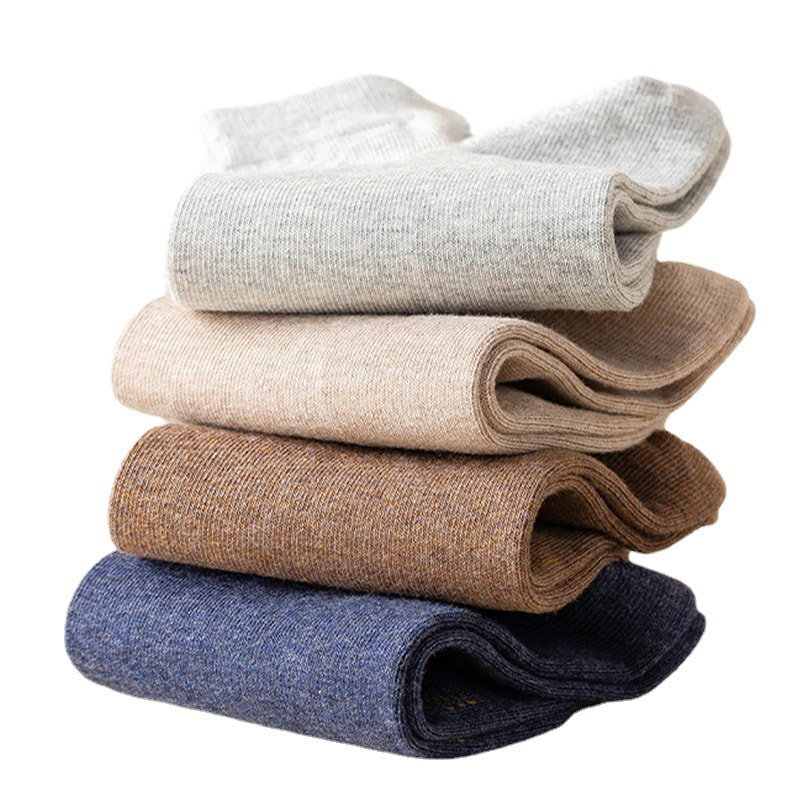 Spring and Autumn Combed Cotton Men's Short SocksSolid-color combed cotton short socks with breathable, moisture-absorbing fabric, useful for comparing plain cotton construction with summer mesh styles.View Product →
Sizing and Fit: Three Checks Before You Order
Sock height does not change your size, but it does change how the sock behaves on the foot. Run these three checks first.
- Match to shoe size, not to body height. Most quarter socks are graded by shoe size, for example 6 to 8.5 as a medium, 9 to 12 as a large and 12 to 15 as an extra large. If you fall between two sizes, decide whether a looser or a firmer cuff is the safer compromise for the shoes you wear most.
- Confirm the leg length. Under the same size label, a 4-inch and a 6-inch cuff behave quite differently inside a mid-top trainer versus a hiking boot. For low-profile sneakers, 4 to 5 inches is often enough; for boots and high-tops, 5 to 6 inches avoids a gap at the collar.
- Look at the heel. A shaped heel pocket keeps the sock anchored far better than a straight tube, especially in shoes with a loose fit.
Where Quarter Top Socks Work Best
This height suits a broad set of situations:
- Mid-top and high-top sneakers, for daily wear and light training.
- Golf and walking, where the ankle stays covered without extra heat.
- Smart casual outfits where a small band of sock should show between trouser hem and shoe.
- Spring and autumn days when ankle socks feel cold but crew socks feel heavy.
They are a poor match for dress shoes with a formal suit, for tall boots that need layering, and for very hot weather where maximum airflow is the priority.
The Sport Version: Cushioning, Moisture and Stability
In athletic use, a sock has three jobs: move moisture away, cushion impact and keep the foot stable inside the shoe. A quarter-height sport sock usually adds terry cushioning under the heel and forefoot, elastic support through the arch and a lighter mesh panel across the instep. With mid-top shoes, the area under the ankle bone needs some thickness, otherwise the shoe collar creates friction on every stride.
Running and court sports are less forgiving about seams. A flat toe seam prevents the hot spot that shows up after several kilometers, and cuff recovery matters just as much: a cuff that is too tight leaves a mark on the ankle, while one that is too loose forces you to pull the sock up repeatedly.
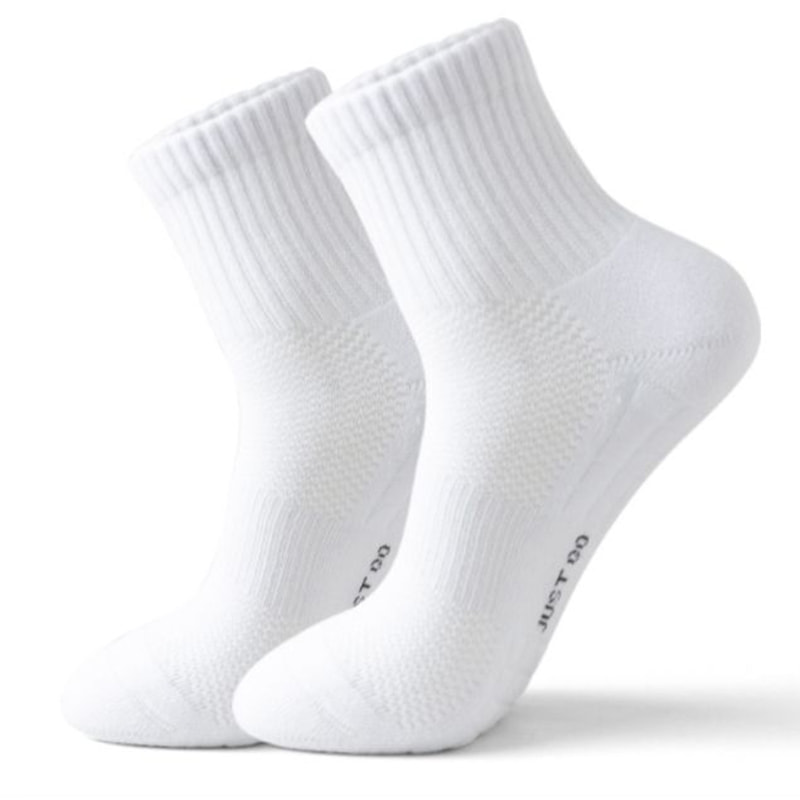 Towel-Bottom Cotton Running Socks for MenCushioned towel-sole sports socks for spring and autumn running, with breathable construction and anti-slip details to reduce moisture and impact during exercise.View Product →
Care and How Long a Pair Lasts
Quarter socks usually wear out at the cuff before the sole gives way, so cuff recovery is the real measure of lifespan. Washing at or below 40 degrees Celsius, avoiding high-speed spinning and skipping the dryer all slow down the loss of elasticity. A mesh laundry bag reduces snags from zippers and hooks in the same load.
For a more detailed routine, the guidance on men's sock care and extending service life applies just as well to quarter-height styles.
 Summer Pure Cotton Mesh Men's Low-Cut SocksBreathable pure cotton mesh short socks for hot weather, designed to keep feet dry and reduce odor while fitting low around the ankle.View Product →
For Buyers: What to Lock Down Before Production
For retailers and brands, quarter socks are a reliable repeat-purchase category because shoppers tend to buy several pairs at a time and replace them as they wear out. The risk sits in consistency. If cuff tension and dye depth drift between batches, return rates climb quickly and the style loses shelf space.
Our mill in Zhuji runs 120 sock machines, 5 toe-closing machines and 5 boarding machines, with more than 100 trained staff and a network of over 20 partner workshops handling secondary processes such as dot coating, embroidery and brushing. Factory inspections include FAMA, IDFL, BSCI, COSTA and Primark human rights audits. Buyers working with us typically fix three things at sample stage: the exact leg length in centimeters, the cuff recovery standard, and the light source used for color approval. Once those three are agreed, production variance stays within a workable tolerance.
To sum up: men's quarter top socks are the height that covers the ankle bone and stops between the shoe opening and the calf. When choosing a pair, check four things, the leg length, the fiber blend, the fit across the ankle and the recovery of the cuff. Get those right and the sock stays where it should, all day.



 English
 中文简体
 Español