A red ring above the ankle after twenty minutes of wear tells you more about a sock size than the number printed on the pack. Men with diabetes run into that ring more often than most, partly because reduced sensation in the feet means the warning arrives late, and partly because swelling, a wide forefoot or a heavy calf can push a standard size out of range.
The practical rule is short. Measure in the evening and write down three numbers: foot length from heel to longest toe, the circumference around the widest part of the ball of the foot, and the ankle circumference just above the ankle bone. Allow roughly half a centimetre of length ease, and choose a sock whose top band measures at least two centimetres more than the bare ankle. Length gets you into the right size band; the other two numbers keep the sock from pressing where it should not press.
Why three measurements beat one size label
Most diabetic socks are sized by shoe size, sometimes with a width range attached. That works well for feet that have kept their shape and struggles with feet that have not.
- Nerve sensation. Reduced feeling in the toes and sole means a tight band or a bulky seam is noticed late, often only after the skin has already been marked.
- Swelling. Foot volume grows through the day, in warm weather and on long car or plane journeys. A sock measured at seven in the morning can be tight by five in the afternoon.
- Width. The forefoot tends to spread with age and with weight change, while foot length barely moves. A sock sized only by length can squeeze across the ball of the foot.
- Shrinkage. Cotton and cotton-rich socks commonly lose three to five percent of their length in the first few washes, so a borderline fit quickly becomes a short fit.
Put those four together and the conclusion follows: a single length figure cannot describe a foot that varies in width, volume and sensation across one day.
The numbers worth writing down
Four figures cover almost every size chart in circulation. Take them standing, with weight on the foot, because sitting under-reports forefoot spread by several millimetres.
Three core measurements plus one optional calf figure describe nearly every men's diabetic sock size chart in use today.
| Measurement |
How to take it |
What it controls |
| Foot length |
Stand on paper against a wall, mark the heel edge and the tip of the longest toe, measure between the marks with a rigid ruler. |
Total sock length and whether the heel pocket lands under the heel rather than on the arch. |
| Forefoot girth |
Wrap a soft tape around the widest part of the ball of the foot, level and snug but not indented. |
Whether the knit stretches across the foot instead of compressing it. |
| Ankle girth |
Measure just above the ankle bone, then repeat late in the day if swelling is usual. |
Band size; the relaxed band should sit two centimetres or more above this figure. |
| Calf girth |
For mid-calf and knee styles, measure the widest part of the calf and the narrowest point above it. |
Whether a longer style will slide down or bite into the leg. |
The longest toe is often the second toe, not the big toe, so mark whichever toe reaches furthest rather than assuming. Measure both feet as well; a difference of half a centimetre between left and right is common, and the larger foot decides the size.
Measuring at home in seven steps
- Measure late in the day, when swelling has peaked, and once in the morning if you want to see the full daily range.
- Place a sheet of paper against a wall and stand with the heel touching the wall.
- Mark the heel line and the tip of the longest toe, then measure between the two marks with a ruler, not a tape.
- Run the tape around the ball of the foot, keeping it level. If the tape leaves a groove in the skin, loosen it and repeat.
- Measure the ankle just above the bone, and the calf as well if the socks are mid-calf or longer.
- Repeat on the other foot and use the larger of the two results.
- Write the date on the paper and re-measure every six months, or after any change in weight, footwear or medication.
Reading a size chart without guessing
Nearly every men's diabetic sock chart lists foot length in centimetres or a shoe size range, and relatively few list band circumference. That is the gap to close before ordering. Ask for the relaxed and stretched band measurements if you are buying from a supplier, and treat a tolerance of about half a centimetre either way as normal for knitted goods.
Between two sizes, take the larger one. The reasoning is practical rather than cautious: socks shrink, feet swell and a slightly long sock can be tolerated while a slightly short one cannot. A foot measuring 27.5 centimetres, faced with a chart that runs 26 to 28 and 28 to 30, belongs in the second band.
Check the shoe as a sanity test. Pull out the insole and compare its length with the foot measurement; a 27.5 centimetre foot in a shoe with a 28 centimetre insole is consistent, while a 26 centimetre insole suggests one of the two numbers is wrong. Also confirm whether the chart refers to the foot or to the sock, because a crew sock is usually one to two centimetres longer than the foot it fits.
Checking the fit once the socks arrive
Four checks take under a minute and catch most sizing errors before they cause trouble.
- Band. A fingertip should slide under the top band without forcing. Wear the pair for half an hour, remove it and look for a mark that lasts more than twenty minutes.
- Toe seam. Run a fingertip along the inside of the toe. A flat or hand-linked seam sits level; a ridge signals a pressure point.
- Heel pocket. The heel should sit inside its own pocket, not on the arch. If it rides forward, the sock is too short.
- Wrinkles. Loose fabric bunching under the arch or across the toes creates exactly the rubbing that diabetic feet tolerate poorly.
Washing decides how long that fit lasts. Hot water, tumble drying and stretching a damp sock over a radiator all shorten the knit, and the maintenance advice given for men's round mouth ship socks applies just as well here: cool wash, air dry, no heat.
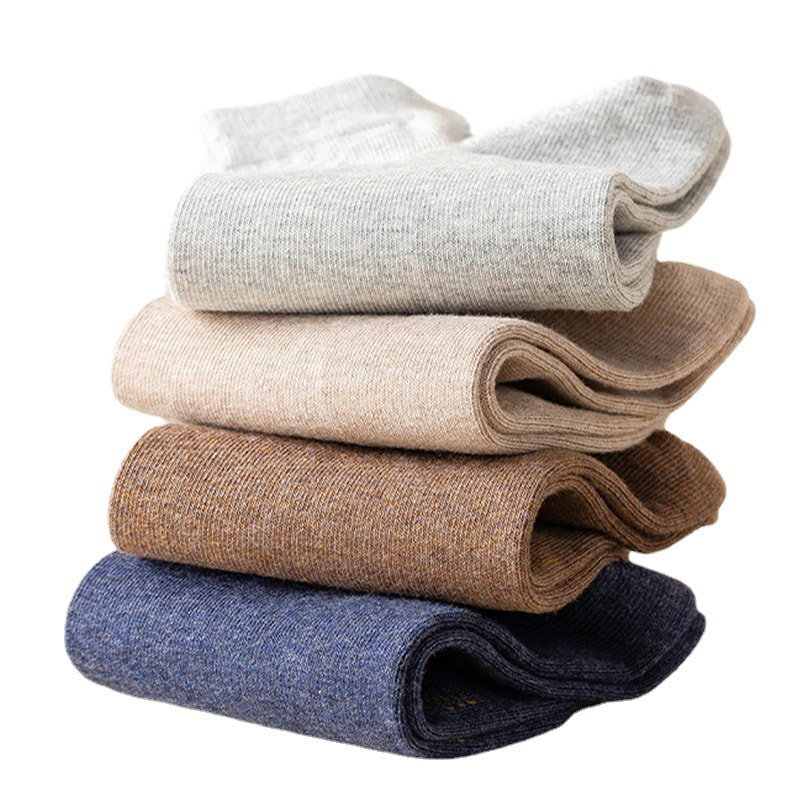 Spring and Autumn Combed Cotton Solid Color Men's SocksA soft combed cotton short sock for everyday wear, with solid-color styling and a low-pressure top; check the measured size band.View Product →
For everyday wear, a combed cotton short sock with a soft, low-pressure top makes a sensible starting point, provided the measured size band matches rather than the shoe size alone.
Wide feet, swelling and cold feet
A wide forefoot needs either a size band that covers the girth or a knit with genuine stretch. Choose one, not both, because a stretchy sock pulled over a foot already at the top of its size range ends up compressed rather than comfortable.
Swelling deserves a routine rather than a one-off measurement. If the ankle grows by a centimetre between morning and evening, measure in the evening and buy to that figure; the morning sock will simply feel roomy. Two pairs in different bands, one for early wear and one for later, is a common solution for men whose swelling is pronounced.
Cold feet push people toward thick socks, and that is where sizing slips. A thick looped knit occupies volume inside the shoe, so add half a centimetre to the length allowance and re-check the shoe fit with the sock on. A mid-length wool blend worn over a thin liner often gives more warmth than a single very thick layer, and it distributes pressure more evenly.
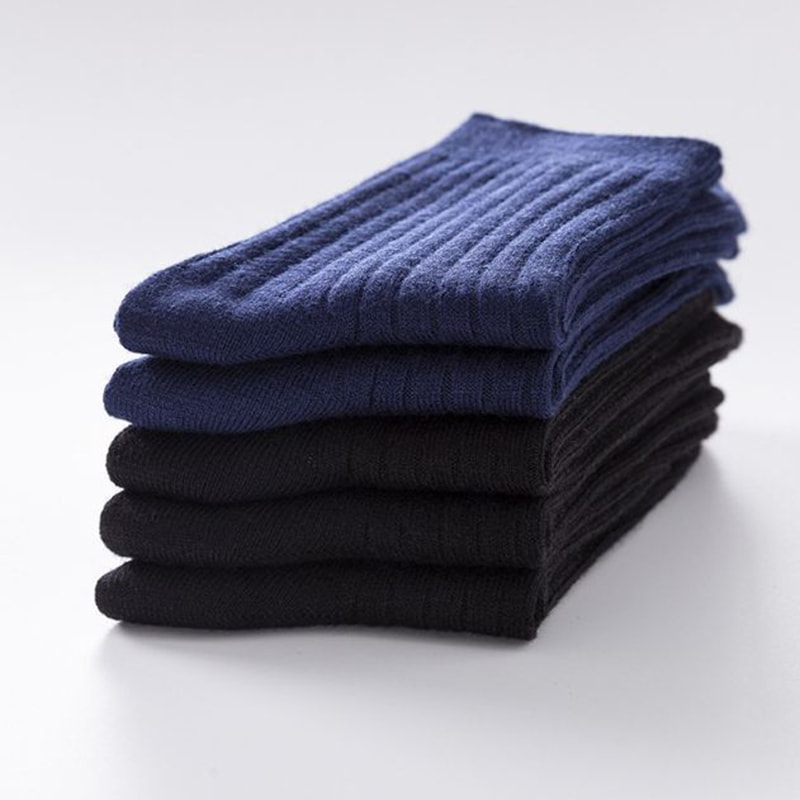 Men's Mid Length Woolen Socks for Autumn and WinterA warm mid-calf wool sock for cold weather, with elastic fit and moisture-absorbing wool; useful when layering needs a mid-length option.View Product →
In warm weather the opposite applies. A thin mesh knit holds less heat, but the band still has to clear the ankle measurement, which is why summer sizing should never be copied from a winter order.
What to specify when ordering in bulk
Buyers carrying diabetic-friendly styles for retail face a different problem: the fit has to be repeatable across thousands of pairs, not just correct on one foot. Four items belong in the order sheet.
- Size matrix. State the bands, for example 24 to 26, 26 to 28 and 28 to 30 centimetres, and the quantity split, rather than a single average size.
- Band tolerance. Ask for the relaxed and stretched top measurement, with an agreed tolerance such as 0.5 centimetres, and confirm it applies after washing.
- Seam type. Specify a flat or hand-linked toe and reject any ridge that can be felt through a single layer of fabric.
- Shrinkage limit. Three percent after three washes at 40 degrees is a workable ceiling, and it should be verified on the pre-production sample.
Elastane content is the quiet variable. Enough to recover shape is useful; too much produces a band that grips, so a cotton-rich blend with modest stretch usually suits this category better than a high-stretch knit. A factory such as BoLong Socks, which produces men's styles across short, mid-length and long lengths, can normally work from a size matrix and a band tolerance written into the order, and the men's socks range shows the lengths and knits that a diabetic-friendly line is usually built from.
 Summer Pure Cotton Mesh Men's SocksA light pure cotton mesh short sock for hot weather, designed to improve air circulation and reduce stuffiness while fitting low at the ankle.View Product →
Hot-climate programmes often pair a light mesh knit with a looser band, and cool-climate programmes pair a looped wool blend with a wider size matrix, because thicker socks shift the fit by roughly half a size.
Measuring for men's diabetic socks comes down to three numbers taken at the right time of day, one honest look at the band after half an hour of wear, and a size chart that states its tolerances. Feet change, socks shrink and swelling follows its own schedule, so re-measure twice a year and treat the first wash as the real test of whether the fit holds.



 English
 中文简体
 Español