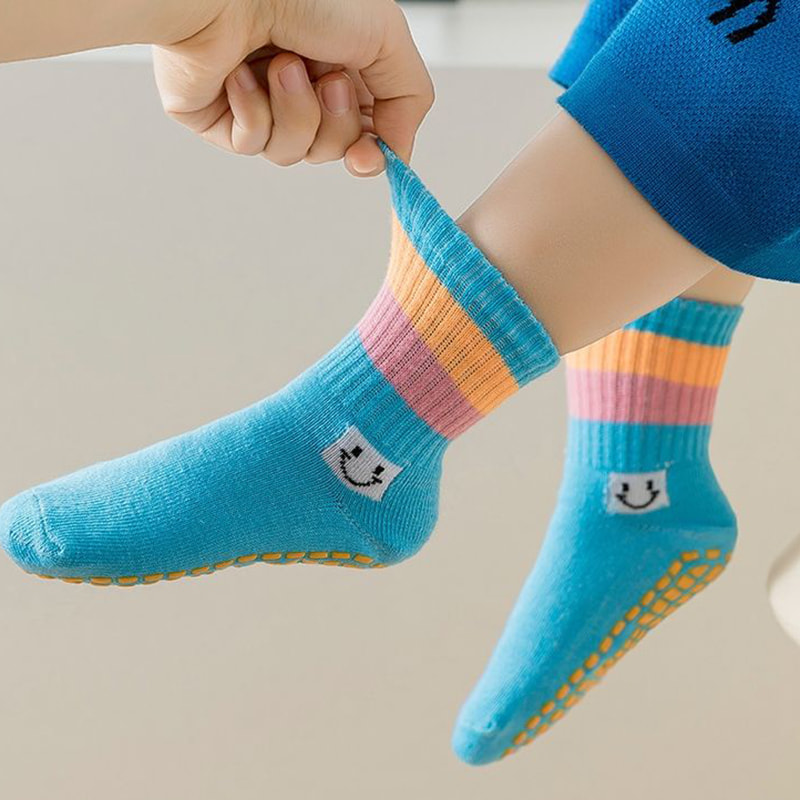
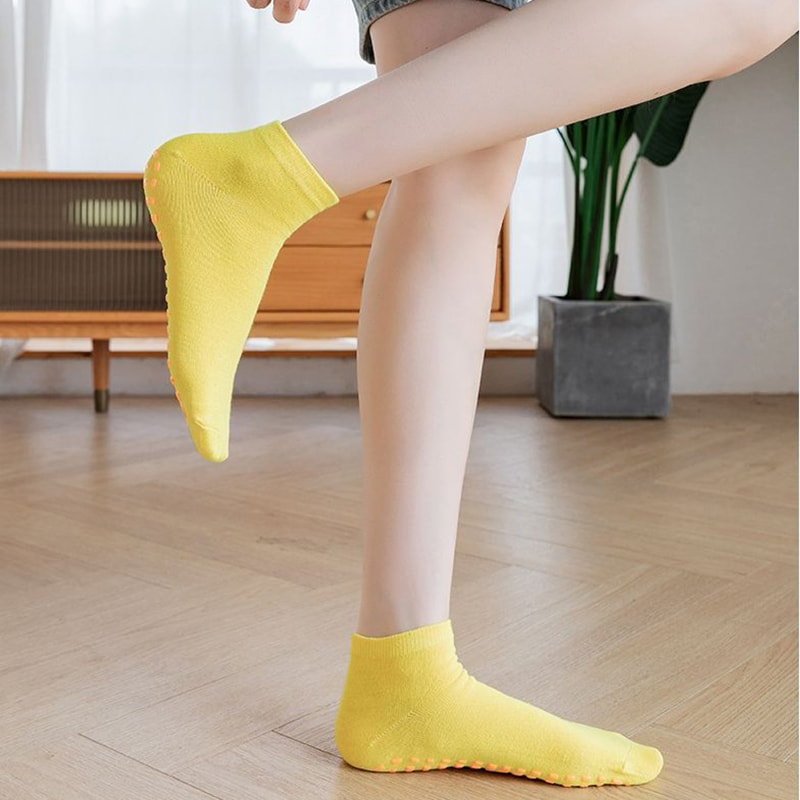
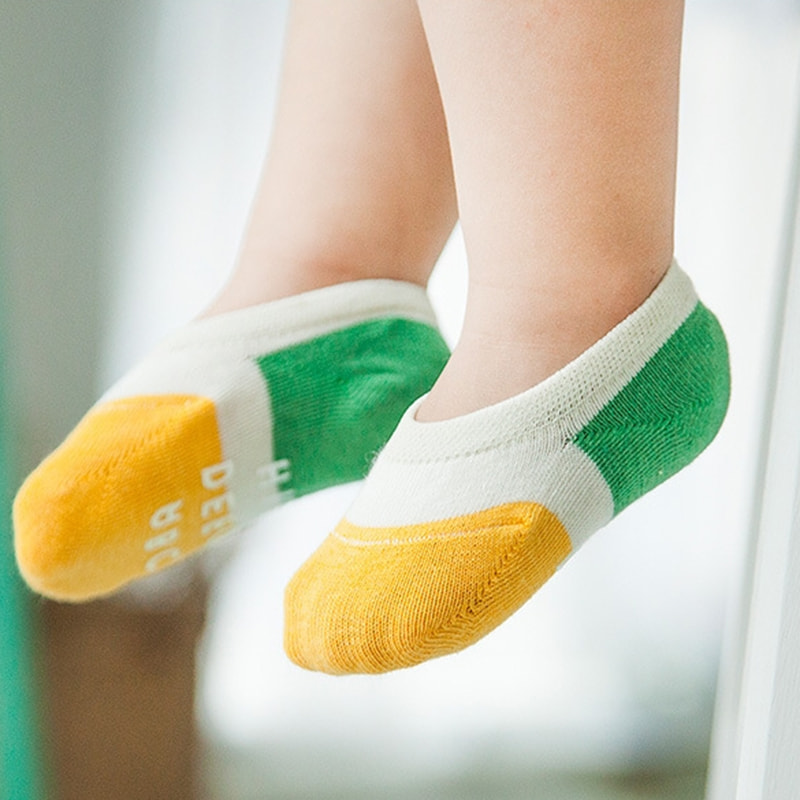
Children's Boat Socks are a category of low-cut, no-show socks designed specifically for children's feet, cut to sit below the ankle so that they remain hidden inside shoes such as loafers, sneakers, canvas shoes, and slip-ons. The name "boat sock" comes from the shape of the sock when laid flat — the shallow, curved profile resembles the hull of a small boat. They are also widely referred to as invisible socks, liner socks, or no-show socks in different markets.
The defining characteristic of children's boat socks is that they provide the practical comfort and hygiene benefits of wearing socks while remaining completely invisible above the shoe line, giving children a clean, barefoot appearance even when a sock is present. This makes them particularly popular during warmer seasons, for school uniform looks that require low-profile footwear, and for any situation where ankle socks would look too casual but bare feet would be inappropriate.
Children's boat socks differ from adult versions primarily in their size range, construction considerations for active small feet, and material choices that account for children's more sensitive skin. A well-designed children's boat sock combines a silicone heel grip strip, breathable fabric blend, moisture-wicking properties, and a soft toe seam — features that prevent the sock from slipping down into the shoe and ensure all-day comfort during play, school, and social activities.
The Key Design Features That Define a Quality Children's Boat Sock
Not all children's boat socks perform equally well. The construction details that separate a quality product from a poor one are specific and measurable. Understanding these features helps parents, buyers, and product developers make informed decisions.
Silicone Heel Grip Strip: The Most Critical Feature
The most common complaint about boat socks — for both children and adults — is that they slip down into the shoe during wear. For children who are running, jumping, and engaging in high-activity play, this problem is amplified. The solution is a silicone gel heel grip strip applied to the inside of the sock at the heel position.
This strip creates friction between the sock fabric and the shoe's inner lining, preventing the sock from migrating downward with foot movement. Quality children's boat socks use a silicone grip strip of 15 to 25 mm width, bonded to the fabric by heat-pressing rather than adhesive, to ensure the grip remains effective through repeated washing cycles. A grip strip that delaminates after five to ten washes provides no lasting benefit. Industry testing of heel grip durability typically requires the strip to maintain at least 80% of its original adhesion force after 30 wash cycles at 40 degrees C. (Source: ASTM D1876 standard for adhesive bond strength; Oeko-Tex Standard 100 for silicone safety in children's products.)
Cut Height and the Invisible Profile
The cut height of a boat sock — measured from the back of the heel to the top of the sock cuff at the front — determines whether the sock truly stays invisible in the intended shoe type. Children's boat socks typically measure 5 to 8 cm in total height at the front, with the heel cup dropping to a depth of 2 to 4 cm below the ankle bone. This geometry ensures the sock remains hidden in shoes with standard collar heights, including:
- Canvas slip-on shoes and espadrilles (collar height approximately 4 to 6 cm)
- Low-profile sneakers and trainers (collar height approximately 5 to 8 cm)
- School loafers and ballerina flats (collar height approximately 3 to 5 cm)
- Boat shoes and deck shoes (collar height approximately 5 to 7 cm)
For high-top sneakers or chunky trainers with collar heights above 10 cm, a standard boat sock may become partially visible, which some children and parents consider a design failure. It is therefore important to match sock cut height to the intended shoe type when specifying or purchasing children's boat socks.
Toe Seam Construction: Comfort for Sensitive Feet
Children's feet are particularly sensitive to pressure points, and the toe seam is a well-documented source of discomfort and blistering in poorly made socks. Two toe seam constructions are available in children's boat socks:
- Linked toe seam: The traditional construction method, where the toe is closed by a linking machine that creates a raised seam running across the top of the toe. In lower-quality products, this seam can be bulky and irritating against children's toe knuckles inside tight-fitting shoes. Better-quality versions use a fine, flat-lock linked seam that reduces the seam height to under 1 mm.
- Hand-linked toe seam: A premium construction where each stitch is individually linked, producing a seam that is virtually flush with the fabric surface. While more labor-intensive to produce, the hand-linked toe provides a demonstrably smoother wear experience and is particularly recommended for children with sensory sensitivities or who dislike the feel of seams on their feet.
Many modern children's boat socks address the toe seam issue differently: by extending the knitting pattern into a seamless toe construction using circular knitting machines, the toe is closed without any seam at all. Seamless toe boat socks represent the highest comfort specification and are preferred for children's hosiery across all age groups, particularly for infants and toddlers who cannot yet communicate discomfort from seam irritation.
Elastic Band Design and Hold
The cuff or top-band of a children's boat sock — the narrow strip of elasticated knitting at the front and sides of the sock opening — provides the secondary retention force that keeps the sock in position above the toes. This band must be elastic enough to grip the foot without slipping, but not so tight that it leaves red pressure marks or restricts blood circulation to growing feet.
The appropriate elastic tension for children's hosiery is guided by EN 13732 (European Standard for Hosiery — Performance requirements) and equivalent international standards. The standard specifies that legwear for children should not produce sub-bandage pressure exceeding 20 mmHg at any point — equivalent to light compression garment classification, below which normal blood flow is unaffected. (Source: EN 13732:2013 Textiles — Hosiery — Performance requirements for socks.)
Materials Used in Children's Boat Socks and Their Effects on Comfort
The fiber composition of a children's boat sock directly determines its softness, breathability, moisture management, durability, and hypoallergenic properties. Children's skin is thinner and more sensitive than adult skin — with a stratum corneum (outer skin layer) that is 20 to 30% thinner in children under 5 compared to adults — making material selection particularly important for this age group. (Source: Fluhr, J.W. et al., Pediatric Dermatology, "Skin Barrier Function in the Neonate," 2010.)
| Fiber Type |
Typical Content in Blend |
Key Properties |
Suitability for Children |
| Combed Cotton |
60 to 80% |
Soft, breathable, hypoallergenic, natural moisture absorption |
Excellent — primary fiber for sensitive skin |
| Polyester |
10 to 25% |
Moisture-wicking, shape retention, durability, quick-drying |
Good in blend — improves durability without sacrificing softness |
| Nylon (Polyamide) |
8 to 20% |
Abrasion resistance, elasticity, dimensional stability |
Good — extends heel and toe life; fine for most children |
| Spandex (Elastane) |
3 to 8% |
Stretch and recovery, grip on foot, prevents slipping |
Essential — without it, sock loses shape and slips |
| Bamboo Viscose |
50 to 70% (bamboo-blend socks) |
Ultra-soft, naturally antibacterial, temperature-regulating |
Excellent for sensitive or eczema-prone skin |
| Modal |
20 to 50% |
Silky soft, highly breathable, retains softness after washing |
Very good — premium comfort option |
Table 1: Common fiber types used in children's boat socks, their typical blend proportions, and suitability for children's sensitive skin. Source: Textile fiber properties per ASTM D1909 and Oeko-Tex Standard 100 material classification.
Why Combed Cotton Is Preferred as the Primary Fiber
Combed cotton undergoes an additional manufacturing step in which short, irregular fiber ends are removed from the yarn using fine combs, leaving only the longest, smoothest fibers aligned in parallel. This process improves the yarn quality in several measurable ways: combed cotton yarn has 15 to 20% higher tensile strength than equivalent-count carded cotton yarn, produces a fabric that is smoother to the touch, and has a more uniform surface that resists pilling. For children's boat socks, combed cotton provides the combination of softness against sensitive skin, good breathability for active feet, and sufficient durability for the intense daily use that children's footwear receives. (Source: American Textile Manufacturers Institute, Textile Fiber and Yarn Properties Comparison; Cotton Inc. technical publications.)
Bamboo Fiber: The Premium Option for Sensitive Skin
Children with skin conditions including eczema, contact dermatitis, or general foot sensitivity benefit particularly from boat socks incorporating bamboo viscose fiber. Bamboo-derived fabric has a naturally smooth fiber surface that reduces friction against the skin, and bamboo viscose has documented antibacterial properties — laboratory testing shows bamboo fabric reduces bacterial counts by 70% or more compared to untreated cotton fabric of the same weight, which is particularly beneficial for children's feet enclosed in shoes throughout the school day. (Source: "Antibacterial Activity of Bamboo Fiber," Journal of Natural Fibers, Vol. 9, Issue 2, 2012.)
Bamboo boat socks are also thermoregulating — bamboo viscose fabric absorbs and releases moisture more rapidly than standard cotton, helping keep feet cool in summer and reducing the clammy feeling that causes discomfort and increases friction blistering risk in hot weather.
Spandex Content and the Sock's Ability to Stay Up
Spandex (elastane) content is the structural component that gives a children's boat sock its ability to conform to the foot's shape, recover from stretching during put-on, and maintain its position throughout the day. A spandex content of 3 to 5% is the industry standard for general-purpose children's boat socks, providing sufficient stretch for comfortable application across the size range while ensuring the sock returns to its knitted dimensions after each use. Higher spandex content (6 to 8%) produces a tighter grip but may feel restrictive on very young children or children with wider foot proportions. The spandex yarn used in quality children's socks should comply with Oeko-Tex Standard 100 Class I (the most restrictive class, applicable to products for children under 3) to ensure absence of harmful substances including formaldehyde, heavy metals, and allergenic dyes.
Size Guide: Getting the Right Fit for Children's Boat Socks
Correct sizing is essential for children's boat socks to perform as intended. A sock that is too large will bunch inside the shoe regardless of the heel grip strip. A sock that is too small will constrict the foot and either slip off entirely or cause pressure discomfort at the toe box. Children's sock sizes are typically mapped to shoe sizes rather than age, because foot size varies considerably at any given age.
| Sock Size Label |
EU Shoe Size Range |
UK Shoe Size Range |
US Shoe Size Range |
Approximate Age Range |
| XS / Size 1 |
EU 19 to 22 |
UK 3 to 5 |
US 4 to 6 |
1 to 2 years |
| S / Size 2 |
EU 23 to 26 |
UK 6 to 8.5 |
US 7 to 9.5 |
2 to 4 years |
| M / Size 3 |
EU 27 to 30 |
UK 9 to 11.5 |
US 10 to 12.5 |
4 to 6 years |
| L / Size 4 |
EU 31 to 34 |
UK 12 to 2 |
US 13 to 3 |
6 to 9 years |
| XL / Size 5 |
EU 35 to 38 |
UK 2.5 to 5 |
US 3.5 to 6 |
9 to 13 years |
Table 2: Approximate size conversion chart for children's boat socks across EU, UK, and US sizing. Actual fit varies by brand — always measure the child's foot length in centimeters and refer to the manufacturer's size chart. Source: ISO 2583:1995 Hosiery size designation and labelling.
The most reliable method for choosing the correct children's boat sock size is to measure the child's foot length in centimeters and compare it to the manufacturer's size chart:
- Place a sheet of plain paper on a hard floor and have the child stand with their full weight on the paper
- Mark the position of the heel at the back and the longest toe (which may be the big toe or the second toe depending on the child's foot shape) at the front
- Measure the distance between the two marks in centimeters — this is the child's foot length
- When the foot length falls near the boundary between two sizes, select the larger size to allow for the growing room standard in children's footwear
Children's feet grow at an average rate of approximately one shoe size every 2 to 3 months between ages 1 and 3, and one shoe size every 3 to 6 months between ages 3 and 6. Buying socks slightly large for younger children is a practical strategy, provided the size difference is not so great that the sock bunches under the foot arch inside the shoe. (Source: American Orthopaedic Foot and Ankle Society, Children's Foot Health position statement.)
Children's Boat Socks vs Other Children's Sock Types: When to Choose Each
Children's boat socks are one option within a broader range of children's hosiery styles. Understanding where they fit within that range helps parents choose the right sock type for each situation.
| Sock Type |
Cut Height |
Best Application |
Key Limitation |
| Boat Sock (No-Show) |
Below ankle; invisible in shoe |
Loafers, canvas shoes, sneakers; warm-weather looks; school uniform |
Less ankle protection; may slip in very active use without quality grip strip |
| Ankle Sock |
1 to 3 cm above ankle bone |
Everyday school wear, sports, outdoor play |
Visible above low-cut shoes; not suitable for uniform smart-casual looks |
| Crew Sock |
Mid-calf |
Sports, hiking, cold weather, boots |
Too warm for summer; too casual for dressy occasions |
| Knee-High Sock |
Below knee |
School uniform (specific dress codes), winter boots, fashion |
Not appropriate for warmer seasons; may feel restrictive on active children |
| Trainer Liner |
Very low-cut; covers heel and toe only |
Athletic shoes and trainers specifically; sports activities |
Designed for trainers only; poor grip in non-athletic shoes |
Table 3: Comparison of children's sock types by cut height, application, and limitations for different wearing situations.
The primary advantage of boat socks over ankle socks is the clean, polished look they produce with low-cut footwear — a consideration that becomes increasingly important as children enter school age and dress codes require more formal footwear. The primary advantage of ankle or crew socks over boat socks is greater protection of the ankle area in outdoor play, sports, and rough terrain use, where friction blisters on the ankle from low shoe collars are more likely without higher-cut sock coverage.
Health and Hygiene Benefits of Children's Boat Socks
Beyond aesthetics, children's boat socks serve important health and hygiene functions that are often underappreciated. Wearing socks inside shoes — even low-profile invisible ones — provides significant benefits compared to going barefoot inside footwear.
Friction Blister Prevention
Friction blisters form when repetitive rubbing between the skin and an adjacent surface (such as the inner lining of a shoe) generates heat that separates the skin layers, allowing fluid to accumulate between the epidermis and dermis. The sock acts as a secondary friction surface — absorbing the rubbing force between the shoe and the foot and distributing it across the fabric rather than concentrating it on a small area of bare skin. Children's feet are particularly vulnerable because children's shoes often fit less precisely than adults' (children cannot always communicate the early symptoms of rubbing), and because children's higher activity levels generate more friction than sedentary adult use.
Clinical studies in podiatric literature confirm that wearing socks reduces blister formation rates by more than 60% in moderate-intensity walking and running activities compared to barefoot-in-shoe conditions. (Source: Herring, K.M. and Richie, D.H., "Friction Blisters and Sock Fiber Composition," Journal of the American Podiatric Medical Association, Vol. 80, No. 2, 1990.)
Moisture Absorption and Foot Hygiene
Children's feet produce significant quantities of sweat — the foot has approximately 250,000 sweat glands per foot, making it one of the most concentrated sweat-gland regions of the human body. Without a sock layer to absorb and wick this moisture away from the skin, sweat accumulates inside the shoe, creating a warm, humid environment that is ideal for the proliferation of bacteria (causing odor) and fungi (causing athlete's foot, tinea pedis).
Children are at higher risk of foot fungal infections in shared environments such as swimming pools, sports changing rooms, and school bathrooms — environments where direct skin contact with contaminated surfaces is common. A cotton or bamboo boat sock that absorbs foot perspiration and transfers it away from the skin surface through capillary action significantly reduces the likelihood of fungal colonization by maintaining a less favorable (drier) microenvironment on the foot surface. (Source: Scher, R.K. and Tavakkol, A., "Tinea Pedis in Children," Pediatric Dermatology, Vol. 25, Issue 1, 2008.)
Protection Against Contact Dermatitis from Shoe Materials
Many children's shoes — particularly synthetic, budget-price footwear — contain adhesives, rubber accelerators, dyes, and leather tanning agents that are documented contact allergens. The most commonly implicated substances include mercaptobenzothiazole (a rubber accelerator), potassium dichromate (used in leather tanning), and p-phenylenediamine (a dye found in some synthetic shoe linings). Children with atopic eczema are at significantly elevated risk of developing contact sensitization to these shoe components.
A sock — even a thin, low-cut boat sock — creates a physical barrier between the child's skin and potentially allergenic shoe materials. This barrier function is particularly important for children who have already been diagnosed with contact sensitivities, or whose parents have observed sock-line eczema patterns (eczema that stops precisely where the sock line begins) suggesting shoe-material reactivity.
Seasonal and Situational Use: When Children's Boat Socks Are Ideal
Children's boat socks are particularly well-suited to specific seasonal conditions and wearing situations. Understanding these use cases helps parents build a practical sock wardrobe that includes boat socks where they genuinely add value.
Spring and Summer: The Primary Season
The peak use season for children's boat socks is spring through early autumn, when warmer temperatures make heavy, high-cut socks uncomfortable and when children's footwear choices gravitate toward lighter canvas shoes, loafers, and casual sneakers. During these seasons, boat socks provide the hygiene and comfort benefits of sock-wearing without the visual heaviness of ankle or crew socks that would create an incongruous look with lighter summer footwear.
In climates where summer temperatures regularly exceed 25 degrees C, the choice between a breathable cotton boat sock and no sock at all significantly impacts foot health. A thin cotton-blend boat sock at 70 to 80% cotton content allows sufficient air circulation through the sock fabric to avoid excessive heat buildup, while still providing the friction protection and moisture management benefits that prevent blisters and odor in shoes worn for extended periods during outdoor play and summer activities.
School Uniform Contexts
Many primary and secondary school dress codes in European, Asian, and Australasian markets specify closed shoes for safety reasons (protecting against dropped objects, appropriate footwear for physical education transitions) but do not explicitly specify sock height. In these contexts, children's boat socks are frequently chosen by parents who want their child to have the hygiene protection of socks while maintaining a clean, minimal look with the school's specified footwear.
For school contexts, the durability of the boat sock across a five-day school week of continuous wear and weekly or twice-weekly washing is particularly important. Quality children's school boat socks should be rated for a minimum of 50 wash cycles at 40 degrees C before showing significant loss of elasticity or pilling of the fabric surface. The silicone heel grip should survive the same number of washes without delamination, as a boat sock that stops gripping after 15 washes provides only a few months of usable life at school use frequency.
Formal and Social Occasions
At formal occasions — school events, weddings, family celebrations — children are often dressed in smart shoes (leather-look loafers, patent court shoes, boys' Oxford-style shoes) where thick, visible socks would break the formal aesthetic. A well-fitted children's boat sock in a neutral color (white, black, or skin-tone) provides the necessary protection and hygiene while remaining completely invisible, preserving the intended formal look of the outfit.
Sports and Physical Activity: Limitations to Be Aware Of
For high-intensity sports — football (soccer), basketball, tennis, athletics — children's boat socks are generally not the recommended primary choice. These activities generate high impact forces at the heel and forefoot, rapid direction changes that stress the Achilles tendon area, and sustained perspiration rates that require the greater moisture-buffering capacity of crew-length sports socks with cushioned foot beds. The ankle area, which boat socks leave uncovered, is also particularly vulnerable to Achilles tendon friction blistering in cleated sports shoes during extended play sessions.
However, for lower-intensity activities — walking to and from school, playground play, casual outdoor activities — children's boat socks are entirely suitable and the reduced ankle coverage does not present a meaningful injury or discomfort risk compared to higher-cut alternatives.
Care and Washing Guide for Children's Boat Socks
Proper care significantly extends the life of children's boat socks and preserves the performance of the silicone heel grip — the feature most easily damaged by incorrect washing and drying practices.
Washing Recommendations
- Machine wash at 30 to 40 degrees C — higher temperatures accelerate elastane degradation, which directly reduces the sock's ability to maintain shape and grip the foot. Every 10-degree increase in wash temperature above 40 degrees C approximately doubles the rate of elastane fiber breakdown per wash cycle.
- Use a gentle or delicate cycle — high-agitation wash cycles impose mechanical stress on the fine-gauge knitting of boat socks that is disproportionate to the level of soiling and accelerates fabric pilling
- Wash inside out — turning boat socks inside out before washing protects the outer surface from pilling caused by friction with other garments in the wash drum, preserving the sock's appearance through more wash cycles
- Use a laundry mesh bag — placing boat socks in a fine-mesh laundry bag prevents them from getting tangled, stretched, or lost inside larger garments like hoodies or trousers during the wash cycle
- Avoid fabric softener — fabric softener coats the elastic fibers of the sock and the silicone heel grip with a lubricating film that reduces grip performance. After several washes with fabric softener, boat socks may slide down significantly more than without softener treatment
Drying Recommendations
- Air dry flat or on a sock clip hanger — the preferred drying method that preserves elastane stretch recovery and silicone grip bond strength
- Avoid tumble drying if possible — tumble dryer heat (typically 60 to 80 degrees C) is the single most damaging factor for boat sock elastane and silicone components. If tumble drying is unavoidable, use the lowest heat setting and remove socks promptly when dry
- Do not iron directly over the silicone grip strip — direct iron contact melts the silicone grip structure. If ironing is needed for appearance purposes, iron on the fabric face only, avoiding the heel area
What to Look for When Buying Children's Boat Socks: A Practical Checklist
With a wide range of children's boat socks available across price points and quality levels, the following checklist provides a practical framework for evaluating and selecting a quality product:
- Silicone heel grip present and heat-bonded: Check that a silicone strip is visible on the inside heel of the sock, and that it is firmly bonded rather than loosely attached. A bonded grip should not be peelable by hand without visible fabric delamination.
- Combed cotton or quality fiber blend: Look for a stated fiber composition of at least 60% combed cotton, or a quality alternative such as bamboo viscose. Avoid socks where the fiber content is not disclosed or where the primary fiber is 100% polyester, which provides poor breathability for children's active feet.
- Spandex content between 3 and 8%: This range ensures sufficient stretch for comfortable application without over-compression of the foot. Below 3% spandex, the sock is unlikely to maintain its shape and grip position adequately.
- Seamless or flat-seam toe construction: Check the toe area for seam bulk. Run a finger across the toe seam to assess whether it produces a ridge that could irritate toes inside a shoe. For children with sensory sensitivities, specify seamless toe construction explicitly.
- Oeko-Tex Standard 100 or equivalent certification: This certification confirms that all components — fibers, dyes, elastane, silicone grip — have been tested and confirmed free from harmful substances at levels that could affect children's health. For products in contact with children's skin, this certification provides meaningful third-party assurance beyond the manufacturer's own claims.
- Correct size for the child's current foot length: Measure the child's foot length in centimeters and reference the manufacturer's size chart rather than selecting based on age. Children's foot sizes vary significantly within any age group.
- Wash durability rating or care label guidance: Quality children's boat socks will provide washing temperature instructions on the care label. Socks rated for washing at 40 degrees C with no bleach instruction are the standard for quality hosiery products.
Our Children's Boat Socks: Designed for Comfort, Built to Stay
Our Children's Boat Socks are engineered to meet the specific demands of children's active daily lives — from school mornings to afternoon play, from formal occasions to casual weekends. Every design decision, from fiber blend selection to silicone grip specification, is made with children's foot health, comfort, and parents' practical needs in mind.
Key features of our Children's Boat Socks range include:
- Premium combed cotton blend with a minimum 65% combed cotton content for maximum softness against children's sensitive skin, combined with polyester for moisture management and nylon for abrasion resistance at high-wear zones
- Heat-bonded silicone heel grip strip designed to retain a minimum of 80% of original grip force after 30 wash cycles at 40 degrees C, ensuring reliable sock position throughout the school day and active play sessions
- Flat-seam or seamless toe closure options across our size range, with seamless toe construction available for children with sensory sensitivities who cannot tolerate the feel of toe seams inside shoes
- Calibrated elastic top-band designed to maintain foot contact without leaving pressure marks, conforming to EN 13732 sub-bandage pressure guidelines for children's hosiery
- Full size range from EU 19 to EU 38 (covering toddlers through early teens), with clear size-to-foot-length mapping provided for accurate selection
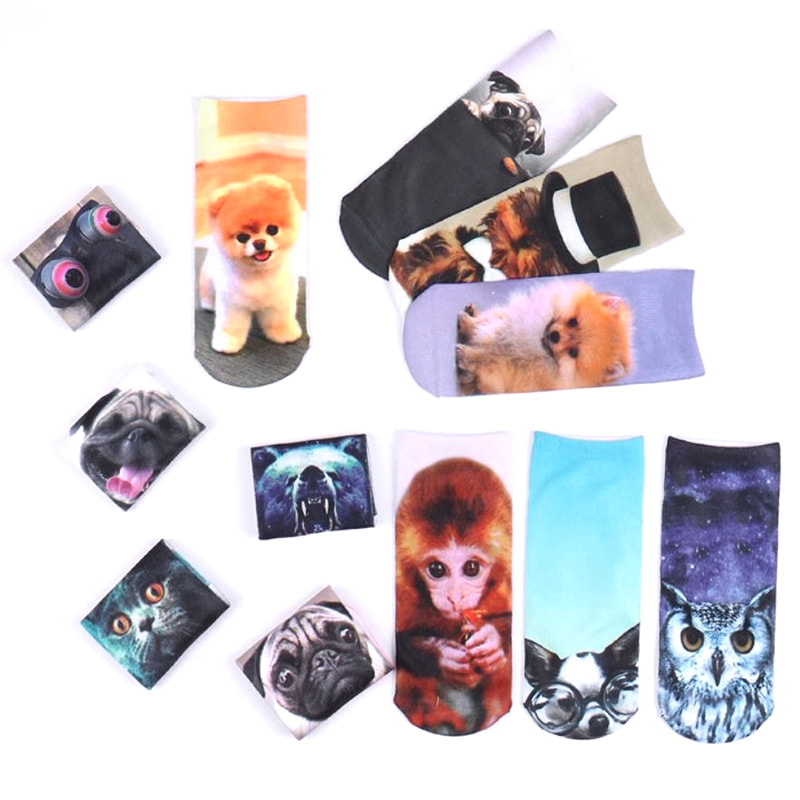
- Multiple color options including classic white and black for school and uniform contexts, and a range of seasonal colors and patterns for everyday and occasion wear
- Oeko-Tex Standard 100 certified materials — all fibers, dyes, and functional components are tested and confirmed free from harmful substances, providing parents with documented assurance of product safety for direct skin contact with children
Whether the requirement is a basic school-day boat sock in a neutral color, a summer pack of breathable cotton invisible socks for holiday footwear, or a premium bamboo blend option for a child with sensitive or eczema-prone skin, our range is designed to provide the right specification at every price point and application context.



 English
 中文简体
中文简体 Español