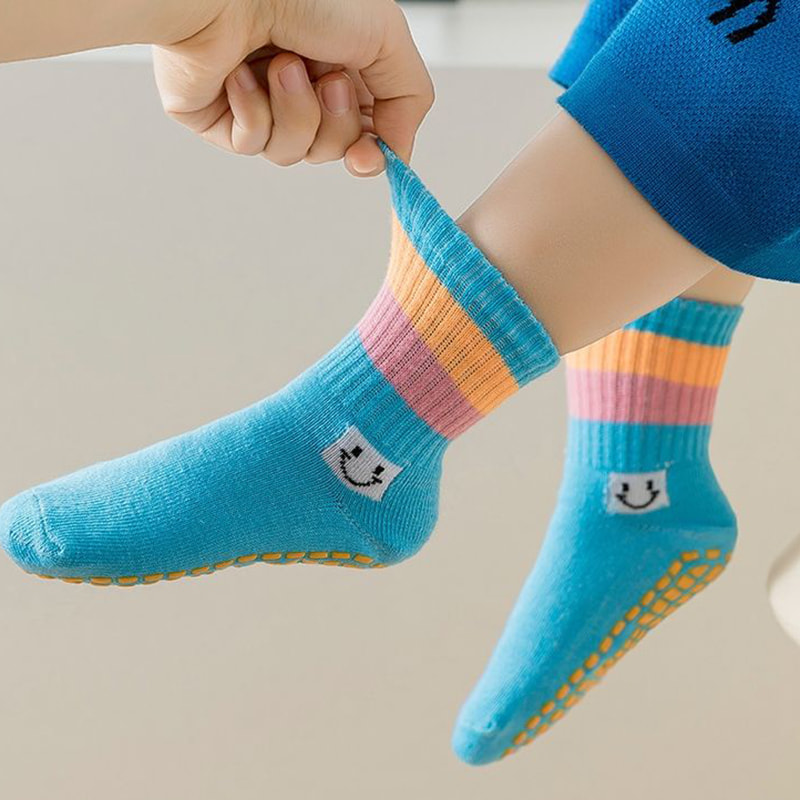
When choosing children's socks, combed cotton is generally superior to ordinary pure cotton. Although both are natural fibers, combed cotton undergoes a process that removes short fibers and impurities, resulting in smoother and more durable yarn. For babies with delicate skin, combed cotton children's socks are not only softer to the touch and less prone to pilling, but also more durable, effectively reducing discomfort caused by friction. They are the preferred choice for those seeking a high-quality wearing experience.
I. The Difference Between Pure Cotton and Combed Cotton
Many parents feel reassured when they see "100% pure cotton" when choosing children's socks, but in fact, "cotton" also has different grades.
- Ordinary Pure Cotton: Contains more short fibers, which can become dry, stiff, and prone to pilling after multiple washes, and may even shrink, potentially irritating children's delicate skin.
- Combed Cotton: This is made by removing short fibers shorter than approximately 1 cm using a combing machine, leaving behind long, uniform fibers. Children's socks made from this material have a fine texture and better moisture absorption and wicking properties, keeping feet dry even after strenuous activity and sweating.
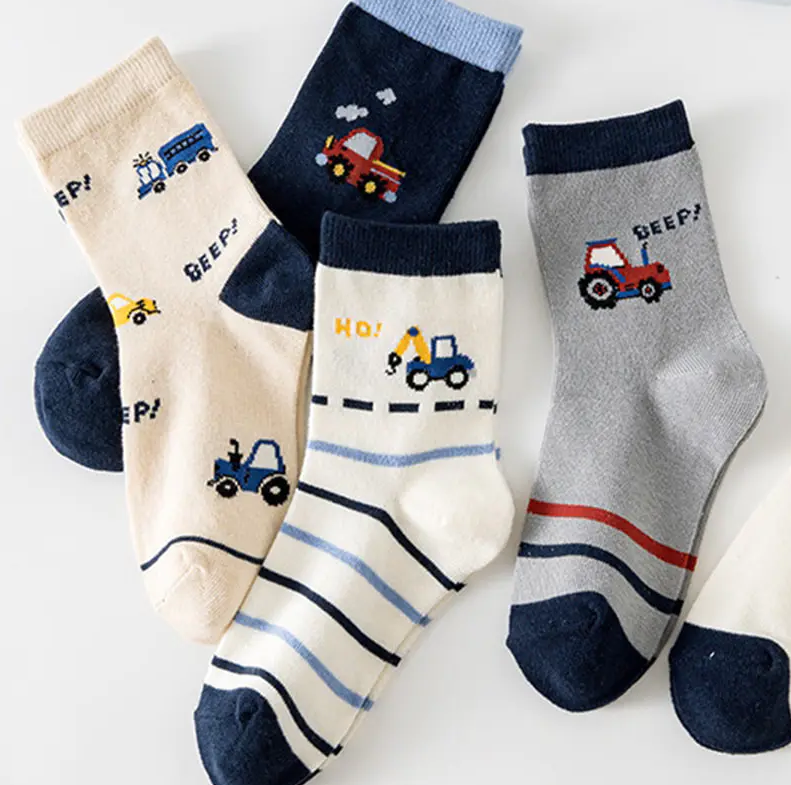
II. Why You Shouldn't Aim for "100% Cotton" When Choosing Children's Socks?
This is a common purchasing misconception. In the children's sock industry, there is no such thing as a truly "100% pure cotton sock."
- Elasticity Requirements: Without elastic fibers (such as spandex/Lycra), the socks would be loose and baggy, easily slipping down.
- Durability Requirements: Adding a suitable amount of nylon can increase the durability of children's socks, preventing holes from easily forming at the toes.
- Golden Ratio: Generally, children's socks with a cotton content of around 70%-85%, supplemented with functional elastic fibers, can ensure the comfort of pure cotton while also providing good fit and durability.
III. Besides Material, What Else Should You Look for When Buying High-Quality Children's Socks?
As a professional children's socks manufacturer, we recommend that parents pay attention to the following details in addition to the material:
- Check the Seam Construction: Prioritize "seamless" or "hand-linked" seams. Ordinary machine stitching leaves a raised, thick seam at the toes, which can easily irritate a child's delicate toes.
- Check the elasticity of the sock opening: High-quality children's socks should use Lycra elastic at the opening, providing a comfortable and secure fit. It should prevent the socks from slipping down during running and jumping, while also ensuring they don't leave red marks on the child's ankles.
- Check the safety category: Ensure the product meets the national Class A (infant and toddler products) standard, guaranteeing zero addition of harmful substances such as formaldehyde, fluorescent agents, and aromatic amines.
IV. How to care for combed cotton children's socks?
- Wash them inside out to reduce friction and pilling of the fibers on the outside.
- Avoid high-temperature drying; natural air drying better preserves the elasticity of the cotton fibers.
When choosing children's socks, combed cotton stands out for its excellent skin-friendly feel and anti-pilling properties. Although the cost is slightly higher than ordinary cotton socks, it is undoubtedly a worthwhile investment for the health and comfort of your child's delicate feet.



 English
 中文简体
中文简体 Español