A pair of good dress socks should not leave a red line above the ankle after two hours at a desk. If yours do, the fold is often the cause. For most men's dress socks, the best default is the flat three-fold: match the pair heel to heel, fold in thirds from toe to cuff, and store the packet flat. Use fold-and-tuck for over-the-calf socks with slick wool or silk blends, and a loose travel roll only when luggage space is tight. The goal is simple: keep the pair together, protect the elastic cuff, and avoid a hard crease that presses into the leg.
Why Dress Socks Need a Different Fold
Dress socks are not casual crew socks with a different label. They are usually thinner, smoother, and cut to sit higher on the calf. Many men's dress socks use a wide elastic band and a flat toe seam, and those details change how the pair should be stored. A tight ball or a hard fold puts pressure on one section of the cuff. Over time, that pressure can leave a visible ridge, weaken the elastic, and make the sock feel loose before the yarn has worn out.
A good fold should do three things. It should keep the pair together without a rubber band. It should leave the cuff relaxed enough that you can slide one finger under the folded edge without resistance. It should also create a flat packet that can sit in a drawer without pressing on the pair beside it. If the folded packet feels hard, the fold is too tight. If the socks slide apart as soon as you lift them, the fold is too loose.
Method 1: The Flat Three-Fold for Most Dress Socks
This is the fold to use first for cotton lisle, merino blends, and patterned dress socks. It keeps the pair visible in the drawer and puts the least stress on the cuff.
- Match the pair heel to heel and toe to toe. Smooth the fabric with your hand so there are no twists or bumps.
- Lay the pair flat on a table or ironing board with the tops facing the same way.
- Visually divide the sock into three sections from toe to cuff.
- Fold the toe third up toward the middle.
- Fold the cuff third down over the folded toe. Keep the cuff edge straight rather than pulled tight.
- Turn the packet over if you want a clean edge facing up, then store it flat or file it upright in a drawer divider.
Check the result before you put the pair away. The cuff should look smooth, not stretched. The packet should be about as thick as a folded T-shirt hem. If it is thicker, unfold and overlap the sections less.
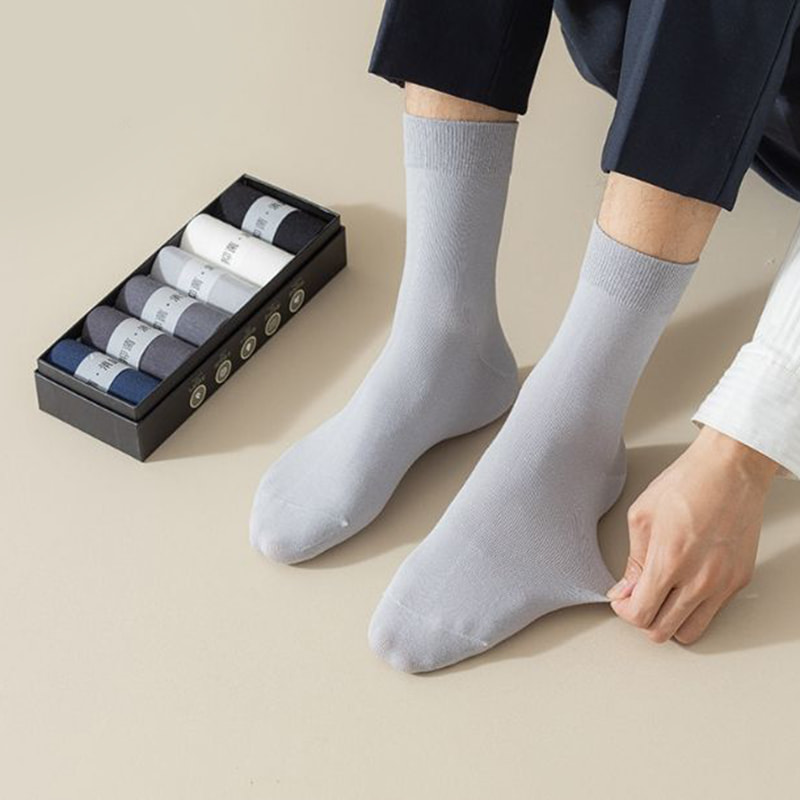 Men's Business Mid-Length Socks Gift BoxA gift-boxed set of breathable mid-length business socks, useful for keeping dress pairs organized and rotating them across occasions.View Product →
For a drawer that mixes business and casual pairs, keep the dress socks in one row and the casual socks in another. That small habit makes it easier to pull one pair without disturbing the stack.
Method 2: Fold-and-Tuck for Over-the-Calf Dress Socks
Over-the-calf socks have more fabric above the ankle, so a simple three-fold can become bulky. The fold-and-tuck method shortens the packet and keeps the pair together without a band.
- Lay the pair flat, heel to heel, with the top side facing up.
- Fold the toe end up to the heel.
- Fold the cuff down over the folded toe. Stop before the elastic band is stretched.
- Tuck the toe end under the cuff band only if the band is wide and relaxed. Do not twist the sock to force it.
- Place the packet in the drawer with the cuff facing out so you can identify the color and pattern.
This method works well for slick wool, silk blends, and socks with a smooth finish, because the tucked end stops the pair from sliding apart. It is less suitable for thick sports socks. If the cuff is narrow, use the flat three-fold instead and accept a slightly longer packet.
Method 3: The Loose Travel Roll
Rolling is a packing method, not the best everyday drawer method. Use it when luggage space is tight and the socks are soft.
- Lay the pair flat and smooth out the wrinkles.
- Roll from the toe toward the cuff, keeping the roll loose.
- Stop before the elastic cuff. Fold the cuff over the roll once, without stretching it.
- Pack the roll in a packing cube or at the top of the bag, not under shoes or heavy items.
Unroll and flatten the socks when you reach your destination. A tight roll left for days can set a curve in the yarn and make the sock feel short at the heel.
Which Fold Fits Which Sock
Use the table as a quick match between the sock in your hand and the storage space you have.
Table: Match the fold to sock length, yarn, and storage space. A folded pair should feel soft, not hard, when pressed.
| Method |
Best for |
Drawer height |
Crease risk |
Speed |
| Flat three-fold |
Cotton lisle, merino blends, patterned dress socks |
Medium |
Low if folded loosely |
Fast |
| Fold-and-tuck |
Over-the-calf socks, slick wool or silk blends |
Low to medium |
Low |
Medium |
| Loose travel roll |
Packing, short trips, soft socks |
High |
Medium if rolled tight |
Fast |
Common Folding Mistakes That Stretch Dress Socks
Most sock damage in a drawer comes from pressure, not from wearing. These are the habits to avoid.
- Balling the pair toe to toe. This puts a hard lump against the cuff and can leave a mark on the leg.
- Using rubber bands, tight clips, or knotting the socks. They crush the elastic and leave a permanent ridge.
- Folding socks while they are damp. The fold sets wrinkles and can trap odor.
- Pairing by the toe seam only. The heels end up in different places, so the packet twists.
- Stacking heavy items on top of dress socks. The weight flattens the cuff and removes the shape.
- Hanging socks over a wire hanger. The narrow wire stretches one point of the cuff.
If a pair already has a light cuff mark, wash it according to the care label and dry it flat. For more detail, this care and maintenance guide for men's socks covers washing and drying habits that help extend sock life.
Drawer and Travel Storage That Keeps the Fold
A fold only works if the storage supports it. In a deep drawer, file the packets upright so you can see the cuff and pattern. In a shallow drawer, use the fold-and-tuck method because the packet is shorter. Keep dress socks away from heavy denim or shoes, and leave a little space between rows so the cuffs are not compressed.
For travel, pack dress socks in a cube or a separate cloth bag. Do not wedge them under a toiletry bag for a long trip. If you roll them, keep the roll loose and unfold them at the hotel. A small cedar block or a dry sachet can help with drawer freshness, but do not place it directly against the sock cuff.
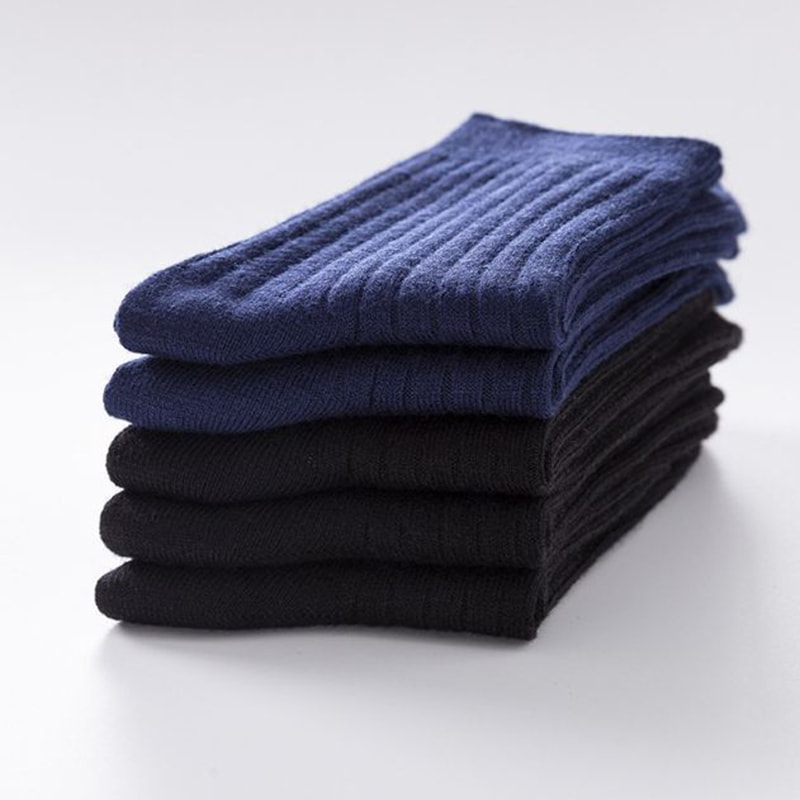 Men's Mid-Length Woolen Socks for Autumn and WinterWarm mid-calf wool socks with elastic cuffs and moisture-absorbing comfort, suited to autumn and winter wear and seasonal sock storage.View Product →
Seasonal socks need the same treatment. Wool blends can be folded flat, but give them more room in the drawer than cotton lisle because the yarn has more loft.
Quick Buying Check Before You Fold
A dress sock that folds neatly usually has a relaxed cuff, a clear heel pocket, and a flat toe seam. If a new pair feels tight on the leg before you fold it, a different size or a wider cuff will solve more than a new folding technique. Look for a cuff that returns to shape after a gentle stretch and a foot that lies flat without curling at the toe.
You can compare men's mid-length socks in the product range, then choose the fold that matches the sock length. For daily office wear, the flat three-fold is the safest default. For over-the-calf pairs, use fold-and-tuck. For travel, use a loose roll and unpack it promptly.
Final Check Before the Drawer Closes
Pick up the folded pair and press it between your fingers. It should feel soft and even, not hard in the middle. The cuff should be smooth, and the pair should stay together when you lift it by the top. If it fails any of those checks, unfold it and start again with less tension. A good fold takes a few seconds, but it protects the shape of the sock and the comfort of your leg through a full day.



 English
 中文简体
 Español