Choosing the best women's short socks comes down to four core decisions: the right sock height for your footwear, the best material for your activity and climate, the correct size for a secure fit, and the appropriate cushioning level for your daily use. Get these four right and you will have socks that stay comfortable through long days, do not slip inside your shoes, resist odour, and look good with whatever you are wearing. Skip any one of them and even a well-priced pair will leave you with blisters, sagging cuffs, or damp feet by mid-afternoon.
The sections below examine each decision point in practical detail, with specific numbers, material comparisons, and scenario-based guidance to help you identify exactly what to look for when buying women's short socks.
Understanding Short Sock Heights: Which Cut Works for Which Shoe
Women's short socks come in several distinct heights, and the right choice depends entirely on what shoes you plan to wear them with. Using the wrong height creates visible sock lines, bunching above the shoe collar, or—if the sock is too short—the sock migrating down into the shoe throughout the day.
No-Show or Invisible Socks
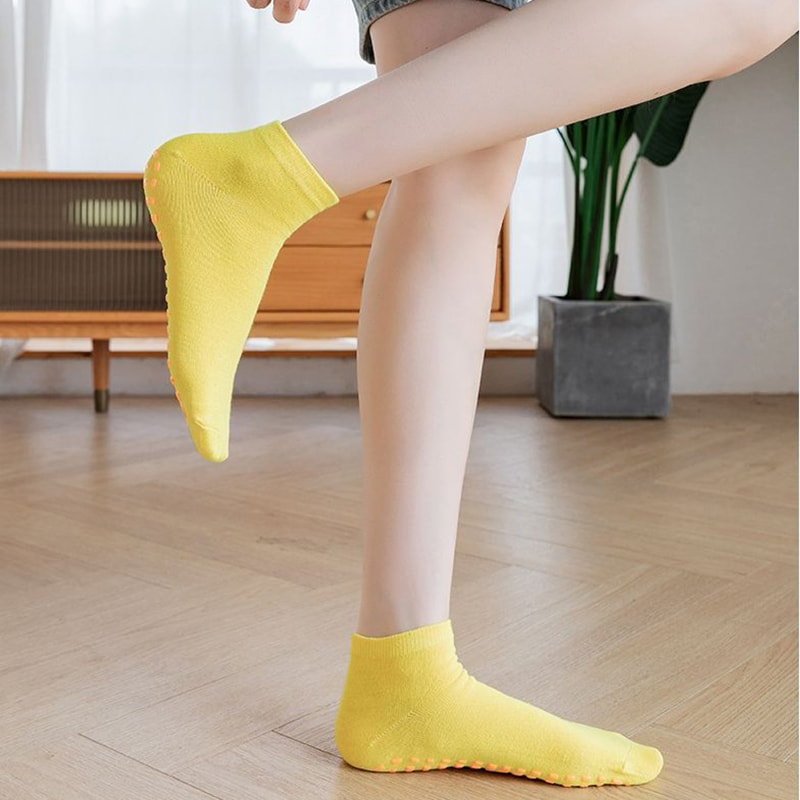
These sit entirely below the ankle bone and are designed to be completely hidden inside low-cut shoes, loafers, and ballet flats. The key quality indicator for no-show socks is the silicone grip strip at the heel—without it, the sock will work down into the toe box within minutes of walking. A quality no-show sock should have a grip strip at least 10 mm wide that makes contact with the heel cup of the shoe. These are ideal for warmer weather and smart-casual looks where a bare-foot aesthetic is desired without sacrificing hygiene.
Ankle Socks
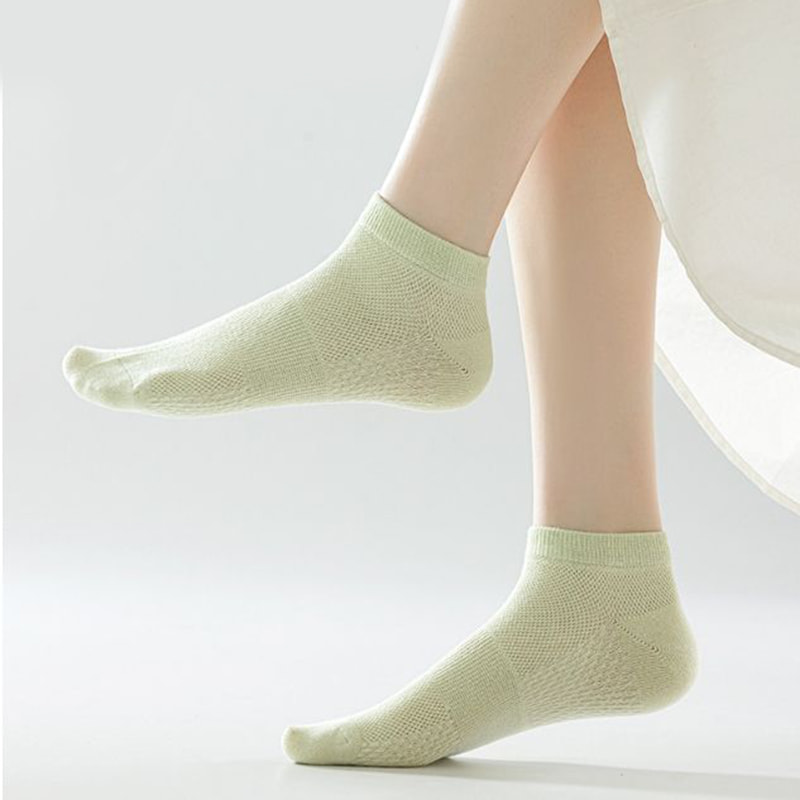
The cuff sits just at or slightly above the ankle bone, typically 5 to 8 cm above the heel. This is the most versatile short sock height for women—compatible with trainers, casual shoes, canvas shoes, and most everyday footwear. Ankle socks are the standard choice for gym use, running, walking, and casual daily wear across all seasons. Look for a cuff that sits flat rather than folding or rolling down; a sock with a rolled cuff indicates insufficient elastic content or incorrect sizing.
Quarter Socks
The cuff rises 5 to 8 cm above the ankle bone, providing additional coverage against rubbing from the collar of hiking shoes, trail runners, or high-top court shoes. Quarter socks also offer better protection for activities involving lateral movement, where the shoe collar might otherwise chafe the lower ankle. This height is the practical choice for outdoor activities, hiking, and sports where ankle coverage reduces friction and helps debris out of shoes.
Folded Cuff or Turn-Down Socks
Originally cut taller and worn folded down to the ankle level, these produce a deliberate layered cuff visible above the shoe. The folded style serves both a functional purpose—allowing the wearer to adjust height—and a fashion purpose, with coloured, patterned, or lace-trimmed cuffs used as a visible style element with trainers and canvas shoes.
Choosing the Right Material: Comfort, Breathability, and Durability
Material is the single most important factor in how comfortable a sock feels throughout the day. Different fibres have genuinely different performance profiles, and matching material to activity makes a significant difference to foot comfort, odour control, and how long the sock lasts before wearing through at the heel or toe.
Cotton
Cotton is soft, breathable, and gentle against the skin—the reason it dominates the everyday sock market. However, it absorbs and retains moisture rather than moving it away from the skin. In low-activity, dry conditions this is fine; during exercise or in warm weather, a cotton sock that is saturated with sweat stays damp and increases friction, which is a primary cause of blisters. Pure cotton is best for casual daily wear, desk-based work, and cool weather use where foot perspiration is minimal. Look for combed cotton, which has shorter fibres removed to produce a smoother, softer yarn with less pilling.
Polyester and Nylon Blends
Synthetic fibres excel at moisture management. Polyester wicks sweat away from the skin and dries 3 to 5 times faster than cotton, making synthetic-dominant socks the practical choice for sports, gym use, running, and any activity that generates significant foot perspiration. Nylon adds tensile strength and abrasion resistance, which extends the life of the heel and toe—the areas that wear through first. Most athletic women's socks use a blend of 60–75% polyester, 20–30% nylon, and 5–10% elastane, which delivers wicking performance, durability, and shape retention in a single construction.
Merino Wool
Merino wool is the premium option for women's socks across all activities. Its key advantage is natural odour resistance through inherent antimicrobial properties—merino socks can typically be worn for two to three days consecutively without developing noticeable odour, which matters for travel or multi-day outdoor activities. Merino fibres are fine enough (typically under 20 microns in diameter) to feel soft rather than itchy against the skin. Merino also regulates temperature—keeping feet cool in warm conditions and warm in cool conditions—making it genuinely useful year-round. The main drawbacks are higher price and slightly lower durability compared to synthetic blends; reinforced heel and toe zones help address the latter.
Bamboo
Bamboo-derived rayon (viscose from bamboo) is increasingly used in women's fashion socks for its silky texture, breathability, and naturally hypoallergenic properties. It is softer than cotton and has better moisture absorption than polyester, making it comfortable for sensitive skin. However, bamboo fabric is less durable than cotton or synthetics and does not hold its shape as well over multiple washes. Bamboo is a good choice for low-activity everyday wear and for women with skin sensitivities, but not the best material for high-friction sport applications.
Comparison of common women's sock materials across key performance properties
| Material |
Moisture Wicking |
Softness |
Odour Resistance |
Durability |
Best For |
| Cotton |
Low |
Good |
Moderate |
Moderate |
Everyday casual wear |
| Polyester / Nylon blend |
Excellent |
Moderate |
Moderate |
High |
Sports, gym, running |
| Merino wool |
Good |
Excellent |
Excellent |
Moderate |
Travel, outdoor, all-season |
| Bamboo (viscose) |
Moderate |
Excellent |
Good |
Low–Moderate |
Sensitive skin, casual wear |
| Cotton-synthetic blend |
Good |
Good |
Moderate |
Good |
Versatile everyday use |
Getting the Fit Right: Size, Elastane Content, and Cuff Design
A poorly fitting sock causes more discomfort than a poorly made one. No amount of premium material compensates for a sock that bunches under the toes, slips off the heel, or leaves a visible compression ring around the ankle after a day of wear.
Sizing Charts and Shoe Size Matching
Women's socks are sized by shoe size range rather than a single number. Common groupings include:
- Small: shoe sizes EU 35–38 / UK 2–5 / US 4–6.5
- Medium: shoe sizes EU 38–41 / UK 5–7.5 / US 7–9.5
- Large: shoe sizes EU 41–44 / UK 8–10 / US 10–12.5
Wearing a sock that is too large produces bunching fabric at the toe and heel—a direct cause of blisters during walking or running. A sock that is too small stretches the knit structure beyond its design tension, compressing the foot, restricting circulation, and causing the sock to wear through more quickly. Always check the manufacturer's size guide before purchasing, as sizing conventions vary between brands and countries.
Elastane (Spandex) Content and Shape Retention
Elastane—also sold under the trade name Spandex or Lycra—is the fibre that gives socks their stretch-and-recovery property. A content of 3% to 8% elastane is sufficient to maintain the sock's shape, keep the cuff from sagging, ensure the sock snaps back to its original dimensions after each wash, and keep the arch support band (if present) pressed firmly against the foot during movement. Socks with zero or very low elastane content lose their shape quickly and develop a loose, ill-fitting feel within weeks of purchase.
Cuff Tension: Comfortable Hold vs. Constriction
The cuff should hold the sock securely without leaving a visible compression ring when removed. After taking the sock off, run a finger along the cuff line on your ankle—if a deep groove remains visible for more than 10 to 15 minutes, the cuff elastic is too tight. This is particularly relevant for women who are on their feet all day; overly tight cuffs cause ankle swelling and discomfort by mid-afternoon. Look for socks described as having a "non-binding" or "comfort cuff" if standard cuffs tend to leave marks on your skin.
Cushioning Levels: How Much Padding Do You Actually Need?
Cushioning in socks is created by loops of extra yarn woven into the sole and sometimes the heel—adding thickness, softness, and impact absorption. The right level of cushioning depends on your footwear and activity; more cushioning is not always better.
- No cushion (ultra-thin) — worn with dress shoes, heeled boots, loafers, and any footwear with a narrow fit where additional thickness would compromise the fit; also preferred for cycling where direct pedal feel matters
- Light cushion — a thin layer of terry loops in the sole; adds comfort without bulk; the best choice for everyday casual use with trainers, canvas shoes, and most everyday footwear
- Medium cushion — moderate padding in the heel and ball of the foot; ideal for gym sessions, walking, and most athletic use; provides meaningful shock absorption during moderate-impact activity
- Heavy cushion — thick padding throughout the sole; suited to high-impact activities like trail running and hiking with stiff footwear, or for women who experience plantar pain or foot fatigue; requires shoes with sufficient volume to accommodate the extra thickness without compressing the toes
Matching Socks to Activity and Occasion
Having two or three different types of women's short socks for different purposes is more practical than trying to find a single pair that works for everything. The following guidance helps identify the right specification for each use case.
Everyday Casual and Office Wear
For desk work and light daily activity, comfort and appearance take priority. A cotton or cotton-blend ankle sock with light cushion is ideal. For smart-casual outfits with loafers or ballet flats, choose a well-fitted no-show sock with a reliable heel grip. Avoid socks with excessive visible logos or sporty detailing if the outfit is professional or semi-formal.
Running and High-Impact Exercise
Running generates significant foot perspiration and places repetitive friction stress on the heel and ball of the foot. Choose a synthetic-dominant sock (polyester or nylon) with targeted cushioning at the heel and forefoot, arch compression for mid-foot support, and a seamless or hand-linked toe to eliminate the raised seam that causes blisters during repetitive forward motion. Anti-blister features—such as a double-layer construction or anatomically shaped left and right socks—are worth the additional cost for regular runners.
Gym and Strength Training
Gym use involves varied movements—standing, squatting, lateral steps, machine-based exercises—without the sustained impact of running. A medium-cushion ankle sock in a cotton-synthetic blend offers the right balance of comfort and moisture management. A secure cuff that stays in place during deep squats and lunges is important; look for a cuff with a reinforced elastic channel rather than just a plain knitted cuff.
Hiking and Outdoor Activities
Light hiking with low-cut trail shoes suits a quarter-height sock in a merino wool or merino-synthetic blend, with medium-to-heavy cushioning and reinforced heel and toe zones. Merino's temperature regulation is particularly valuable on variable-weather hikes where foot temperature shifts significantly between morning and midday. For all-day trail use, the anti-odour properties of merino mean the socks remain comfortable for multi-day trips without washing.
Travel
Travel involves extended periods of walking on varied surfaces, limited access to laundry facilities, and the need to pass through airport security (requiring shoes to be removed quickly). Merino ankle or no-show socks are the practical travel choice: they can be worn for two to three consecutive days without washing, pack to a very small volume, are lightweight, and dry overnight when hand-washed. A travel sock should be thin enough to work with smart footwear and sturdy enough to handle a full day of urban exploration.
Construction Details That Determine Long-Term Quality
The quality of a sock's construction determines how long it maintains its performance after repeated washing and wearing. Several specific construction features are worth checking before purchasing.
Toe Seam Construction
Standard machine-sewn toe seams create a raised ridge that runs across the top of the toe box and can cause significant rubbing during walking. Two superior alternatives exist:
- Hand-linked toe seam — the seam is constructed so the join lies flat, reducing friction against the toe. This is common in higher-quality socks and noticeably more comfortable for women with sensitive toes or bunions.
- Seamless toe construction — the sock is knitted in a way that eliminates the toe seam entirely. This is the most comfortable option and is now available across a wide price range.
Reinforced Heel and Toe
The heel and toe are the first areas to wear through on any sock. Reinforcement with additional nylon or polyester yarn woven into these high-stress zones doubles or triples the lifespan of the sock compared to uniform-weight constructions. Hold the sock up to a light source before buying: the heel and toe of a reinforced sock will appear visibly denser and darker than the surrounding fabric.
Arch Support and Compression Zones
Quality athletic and everyday socks for women often include an arch compression band—a section of tighter-knit elastic that wraps around the midfoot. This band serves two purposes: it stabilises the sock during movement, preventing internal slippage that contributes to blisters, and it provides mild compressive support to the arch, which reduces fatigue during extended walking or standing. Arch support bands are particularly valuable for women with flat arches or plantar fasciitis.
Knit Density and Durability Testing
A simple pre-purchase check: hold the sock up to a light source and look for consistency in the knit density. Thin spots or irregular loop sizes indicate inconsistent knitting quality and predict early pilling or hole formation. A well-made sock will appear evenly lit throughout with no visible weak points. This quick test costs nothing and reliably separates quality construction from inferior alternatives regardless of price.
Style and Aesthetics: Matching Socks to Outfits
Women's short socks increasingly serve a visible fashion function—a deliberate design element rather than a hidden undergarment. Understanding how to use socks stylishly while maintaining functionality extends their appeal beyond purely practical decisions.
When Socks Should Be Seen
Folded cuff ankle socks with trainers and cropped trousers, ribbed socks with loafers, or lace-trimmed socks with sandals are all established style combinations where the sock is a visible, intentional part of the outfit. In these cases, the colour, texture, and pattern of the sock should complement rather than compete with the rest of the look. A practical starting point: match the sock colour to one other element in the outfit—the bag, the belt, or an accent colour in a print—for a coordinated result.
When Socks Should Be Invisible
For dressed-up outfits, heeled footwear, and smart-casual looks where a sockless appearance is intended, no-show socks in a skin-tone or neutral colour are the practical solution. The sock provides hygiene, comfort, and blister protection without being visible above the shoe line. Avoid white no-show socks with dark shoes and outfits, as even a partially visible edge will create a conspicuous contrast.
Quick Selection Reference: Best Women's Short Sock by Use Case
Use the following table as a practical starting point when shopping for women's short socks for a specific purpose:
Recommended women's short sock specifications by primary use case
| Use Case |
Recommended Height |
Best Material |
Cushioning |
Priority Feature |
| Everyday casual |
Ankle |
Cotton or cotton blend |
Light |
Comfort, colour range |
| Office / smart-casual |
No-show |
Cotton or bamboo |
None or light |
Heel grip strip |
| Running |
Ankle or quarter |
Polyester / nylon blend |
Medium |
Seamless toe, arch band |
| Gym / fitness |
Ankle |
Cotton-synthetic blend |
Light–Medium |
Secure cuff, wicking |
| Hiking / outdoor |
Quarter |
Merino blend |
Medium–Heavy |
Reinforced heel, odour control |
| Travel |
Ankle or no-show |
Merino wool |
Light |
Multi-day odour resistance |
| Sensitive skin |
Any |
Bamboo or merino |
Light |
Seamless toe, non-binding cuff |



 English
 中文简体
中文简体 Español