Home / News / Industry News / How to Use Men's Compression Socks for Swollen Ankles: Fit, Timing, and Everyday Wear
How to Use Men's Compression Socks for Swollen Ankles: Fit, Timing, and Everyday Wear
A sock line that is still pressed into your ankle at six in the evening is not a laundry problem. It usually means fluid has pooled in your lower leg during the day, and the fix is not a looser sock. It is a sock that puts the right amount of pressure in the right place at the right time.
Here is the short answer for men dealing with swollen ankles. Choose a measured calf-length or knee-high compression sock in the 15 to 20 mmHg range for everyday puffiness, put it on before you stand up in the morning, and wear it for 8 to 12 hours. Low-cut ankle socks and tight everyday socks rarely solve the problem, because graduated pressure has to be spread along the leg rather than squeezed into a single band above the ankle bone.
Compression socks work on a principle called graduated pressure. The strongest pressure sits at the ankle and gets weaker as the fabric climbs toward the knee. That gradient supports the veins and the calf muscle pump, the natural mechanism that pushes fluid back toward the heart. Without that support, fluid collects around the ankle bone through the day, and the swelling is usually at its worst in the late afternoon.
Length matters for the same reason. A low-cut sock creates one narrow zone of pressure, while a calf-length sock spreads the gradient across the ankle and the lower leg. For a man whose swelling reaches above the ankle bone, calf length is the practical minimum, and knee-high is often the better choice on days with long sitting, long standing, or air travel.
This is also why an ordinary dress sock feels wrong even when it fits. Everyday socks are knitted to stay up, not to create a pressure gradient, so they squeeze hardest at the top band. That is the opposite of what a swollen ankle needs.
Match the Compression Class to Your Swelling
Compression is sold in classes defined by the pressure measured at the ankle in millimetres of mercury. Buying the strongest class on the shelf is a common mistake. More pressure is not the same as more relief, and a class that is too high can leave your toes cold, numb, or tingling by lunchtime.
Compression classes are set by the pressure measured at the ankle in millimetres of mercury, and the pressure is designed to fall as the sock rises up the leg.
Class
Pressure at the ankle
Typical use
Fitting note
Mild support
8 to 15 mmHg
Tired, mildly puffy ankles after long standing or a flight
The easiest class to put on, often sold as a travel sock
Moderate support
15 to 20 mmHg
Everyday ankle swelling, long shifts, post-flight puffiness, mild injury recovery
The usual starting point for men, and it needs a measured calf
Firm support
20 to 30 mmHg
Noticeable swelling and clinician-directed treatment
Needs an accurate measurement and a fit check, not guesswork
Extra firm support
30 to 40 mmHg
Significant swelling and lymphedema, prescribed rather than self-selected
Fitted and supervised by a clinician
For mild to moderate swelling caused by standing, sitting, or travel, the 15 to 20 mmHg class is the usual starting point. If a clinician has already told you to manage more significant swelling, or you are recovering from an ankle injury, follow that instruction rather than the label on the package.
The chart compares how pressure falls along the leg for two common classes of men's compression socks, using the ankle as the reference point. In both classes the ankle receives the full pressure and the numbers drop as the sock climbs toward the knee. In the 15 to 20 mmHg class the ankle sits near 18 mmHg, and the pressure below the knee falls to roughly 7 mmHg. In the 20 to 30 mmHg class the ankle starts near 25 mmHg and still drops to about 10 mmHg below the knee. The pattern matters more than the headline number, because a sock that holds the same pressure all the way up the calf is not graduated compression at all. Notice also that the two classes differ by only a few millimetres of mercury in the upper calf, which is why fit at the ankle decides comfort far more than the class label does.
Measure the Ankle and the Calf Before You Buy
Size charts for compression socks are built on two numbers, ankle circumference and calf circumference. Shoe size is not one of them, and a sock chosen by shoe size alone is one of the most common reasons men abandon compression after a week.
Measure within 30 minutes of waking, before you stand or walk for long.
Wrap a soft tape around the narrowest part of the ankle, just above the ankle bone.
Measure the widest part of the calf, usually about a hand's width below the knee.
Measure from the floor to just below the bend of the knee for the length.
Compare all three numbers with the size chart and follow the calf measurement when the ankle and calf land in different sizes.
Repeat the measurements if your weight changes, or if a clinician changes your treatment.
When the ankle and the calf fall into two different sizes, the calf usually decides, and a band that is too tight at the top is the one place where compression can do real harm. It is also worth remembering that a size chart describes a new sock. Fabric relaxes with washing, so two pairs in rotation will hold their gradient far longer than one pair worn every day. If you are buying for everyday wear rather than a specific prescription, the full range of men's socks is a sensible place to compare lengths and materials before you commit to a class.
Ankle circumference is not a fixed number, and the chart shows a typical pattern for a man who stands and sits through a working day. The measurement is smallest shortly after waking, at about 24.8 cm in this example, and it grows steadily to roughly 27.1 cm by early evening. That is a change of more than 2 cm, which is easily enough to move one man from one sock size into the next on a size chart. It also explains why a pair that feels perfect at 7:00 AM can feel tight and itchy by dinner time. Measuring in the morning gives you the truer and lower number, which is the number the manufacturer expects you to use. If you measure after a long day on your feet, you will very likely order a sock that is too large at the ankle and will not hold its gradient. The gap between the morning and evening figures also gets wider in hot weather, which is worth remembering if you buy a single pair for the whole year.
Put Them On Before Your Feet Touch the Floor
The single habit that decides whether compression works for you is timing. Ankles are smallest in the first 30 minutes after waking, so the sock slides on easily and holds the leg at its baseline instead of pushing fluid upward. Wait until after breakfast and a shower, and you are fitting a sock around swelling that has already started.
A method that works with firm fabric
Turn the sock inside out down to the heel, keeping the foot section intact.
Slide your foot in and check that the heel pocket sits under your heel, not on your instep.
Work the fabric up the leg in short sections with both thumbs instead of pulling the top band.
Stand up, then smooth out any fold or roll before you put your shoe on.
Check your toes for colour and warmth five minutes later, and again at lunchtime.
Wrinkles are the enemy here. A single fold behind the ankle concentrates pressure and can create a sore spot within a few hours, so take an extra 20 seconds to smooth the fabric flat. If you have limited grip or a stiff back, a plastic donning aid or a light dusting of cornstarch on the heel makes the job much faster.
A sock that reaches the calf gives the gradient somewhere to travel. A longer style such as this one is designed for full length coverage over the ankle and lower calf:
Eight to twelve hours is the normal daily window for men's compression socks. That covers a work shift or a long flight but stops short of overnight, because ankles usually drain well enough when you are lying down. Take the socks off before bed unless a clinician has told you otherwise, and put your feet up for 20 minutes in the evening.
On travel days the timing rules tighten. Put the socks on before you leave the house, stand and walk every hour you are awake, and drink water rather than relying on salty airport food. Compression manages pooling, but it does not replace movement.
Wash the socks after every wear in lukewarm water, by hand or on a gentle cycle, and skip both the fabric softener and the dryer. Heat and softener break down the elastane that creates the gradient, so the same habits that extend the life of everyday socks apply here, and a two-pair rotation will outlast a single pair by a wide margin. These care and maintenance habits for men's socks are a good baseline for any sock you plan to wear daily.
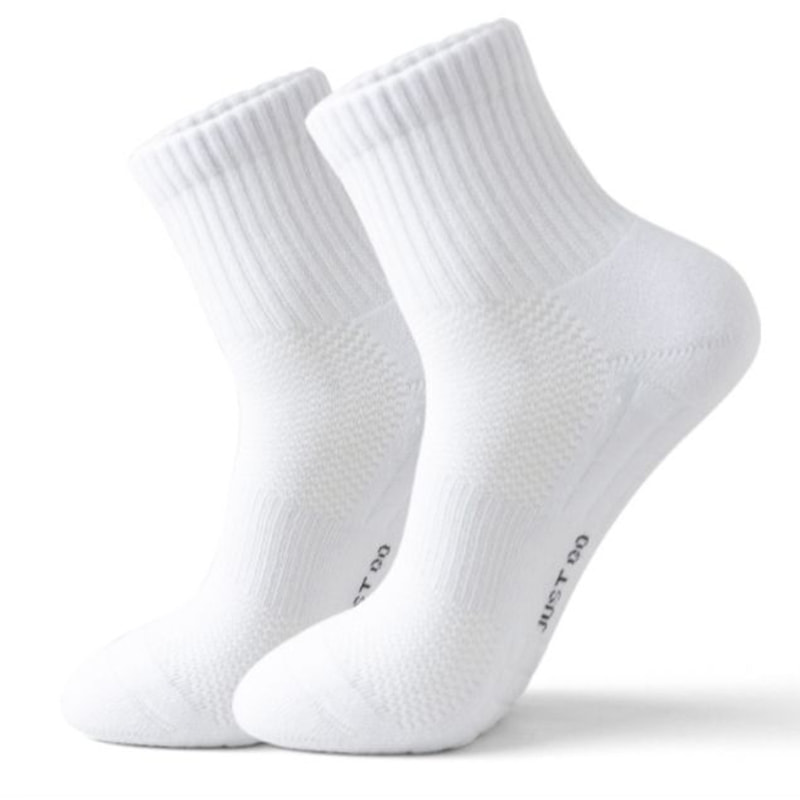
For training days, a sock with a cushioned footbed under a graduated upper is usually more comfortable than a thin medical stocking, especially in shoes that run warm. A towel-bottom sport style like this one handles the sweat and the impact:
Compression is not supposed to feel like nothing. A firm hug around the ankle and a light squeeze at the calf for the first hour is normal, and it usually settles once you start moving. What is not normal is numbness, a burning sensation, or a band that leaves a deep groove which takes more than 30 minutes to fade.
first week of wear, in cm 27.526.525.5Day 1Day 2Day 3Day 4Day 5Day 6Day 7Evening measurement, taken at about 7:00 PM
The line follows evening ankle circumference over the first seven days of consistent morning wear, starting at 27.2 cm and ending near 26.0 cm. The change is not dramatic on any single day, which is exactly why some men quit in the first 48 hours. Most of the drop happens between day one and day four, and the curve flattens after that. That shape is normal, because compression does not remove fluid permanently, it keeps the daily build-up smaller. A flat line in week two still means the sock is doing its job, especially if afternoon tightness and discomfort have eased. If the line climbs instead, check for folds in the fabric, a sock that has lost its stretch, or a medical cause that belongs with a clinician.
Comparing Sock Styles for Swollen Ankles
Three options come up again and again in this conversation, and they are not interchangeable. The chart below scores each one from 1 to 5 on the five things men mention most often, which are pressure control, calf coverage, all day comfort, ease of putting on, and breathability.
The radar chart scores three options against five things men usually care about when their ankles swell. Ankle-length short socks score well on breathability and are easy to put on, but they offer almost no calf coverage and weak pressure control above the ankle. A calf-length compression sock balances the five points, with solid pressure control, decent coverage, and moderate breathability for daily wear. A knee-high medical stocking controls pressure and covers the calf best, but it is the hardest to put on and the warmest in summer. The trade-off is worth naming clearly, because the more of the leg the sock covers, the more control you get and the more effort the sock asks of you each morning. For most working men with mild to moderate swelling, the middle option is the one that actually gets worn every day, and a sock in the drawer beats a stronger sock in the package.
Warning Signs That Mean Stop and Call a Clinician
Swelling in one leg only, especially with pain, warmth, or redness.
Sudden swelling together with chest pain or shortness of breath.
Toes that turn white or blue, or tingling that does not ease within 15 minutes of removing the sock.
Broken skin, blisters, or a rash under the sock.
Swelling that gets worse after several days of correct wear.
Compression socks manage a symptom, not a cause. Heart, kidney, liver, and vein conditions can all produce ankle swelling, and so can several common medications. If any of that applies to you, or if the swelling appears suddenly, get medical advice before you order a class of sock you may not need.
Good compression for swollen ankles comes down to three numbers and one habit. Measure the ankle and the calf in the morning, choose the class that matches your swelling rather than the strongest one on the shelf, and put the socks on before your feet touch the floor. Replace them every three to six months, or as soon as the top band stops snapping back, because relaxed fabric stops delivering the gradient the label promises.
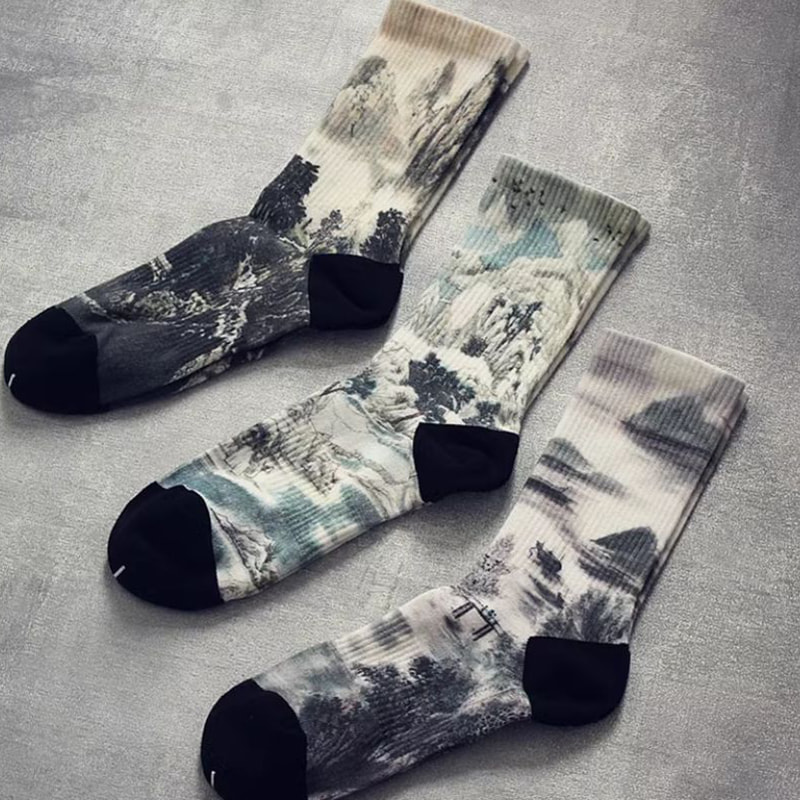
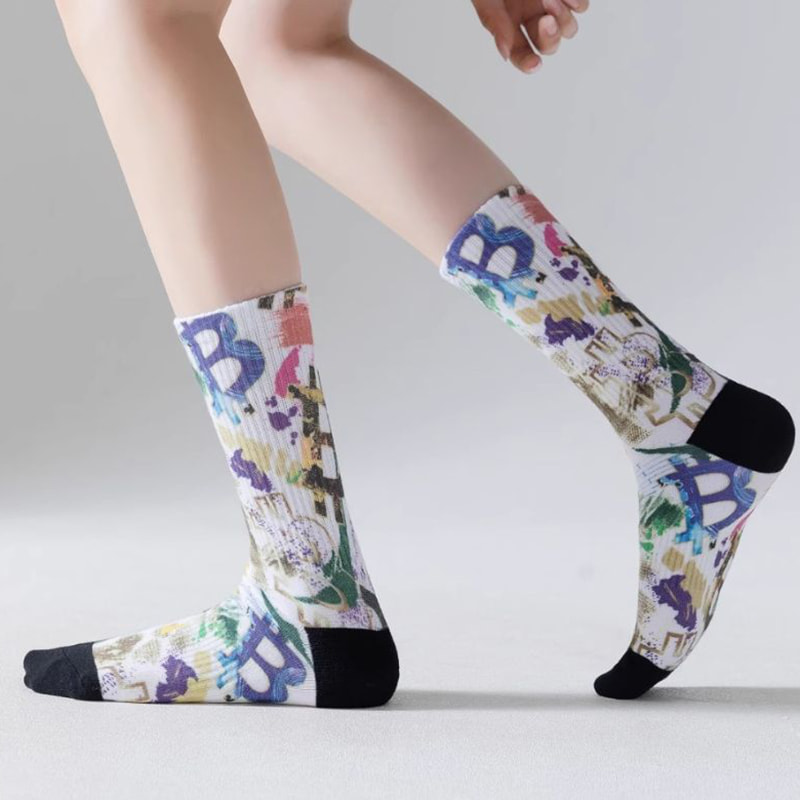
By combining traditional Chinese elements with modern trends and showcasing a strong Chinese style through unique designs, this design style not only meets the personalized needs of young people today but also adds a unique cultural charm to daily wear. Advanced 3D printing technology is used to make the patterns and textures on the socks more three-dimensional and vivid. This technology not only improves the precision and clarity of the patterns but also makes the socks more recognizable and fashionable. As mid-length socks, their length is moderate, which can protect the ankles from the cold invasion of spring and autumn seasons, and will not be too hot and humid. At the same time, the weather changes in spring and autumn seasons are varied, and this sock can adapt well to these changes, providing a comfortable wearing experience for the feet. The printed on the socks The patterns are rich and diverse, It can be traditional Chinese patterns such as mountains and waters, flowers and birds, dragons and phoenixes, or creative patterns that combine modern trendy elements.
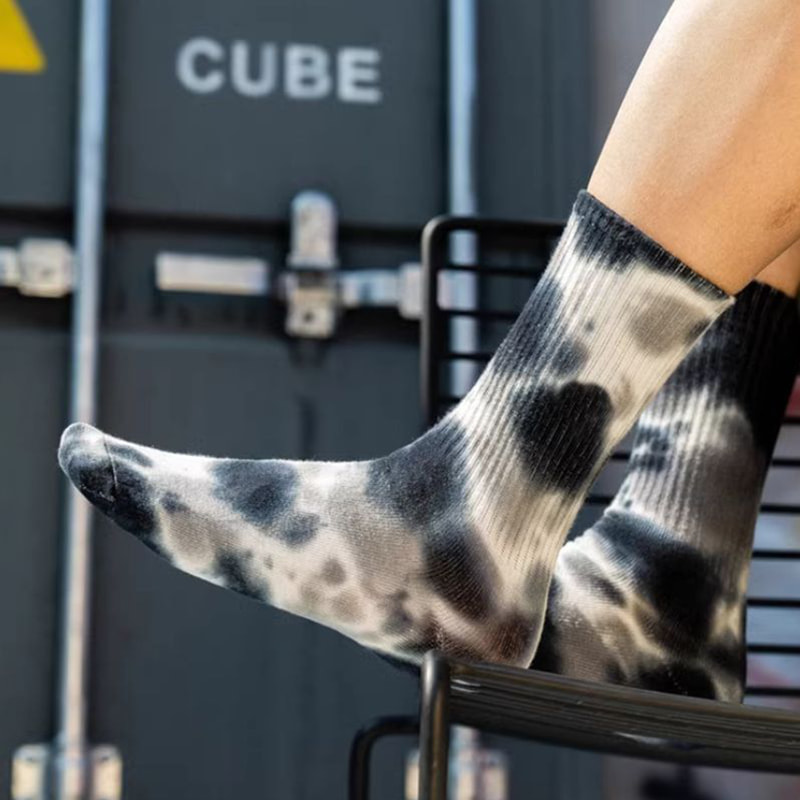
American tie dye is a unique dyeing process that uses specific tying and dyeing techniques to create a rich and colorful pattern and color gradient effect on socks, increasing the fashion sense and personalization of the product, Designed with a mid-length, it is suitable for sports wear such as basketball, providing sufficient wrapping and protecting the ankle from sprains and other injuries. The bottom is designed with a thick towel, which has moisture-wicking performance and can quickly absorb sweat from the feet, keeping them dry and comfortable, and reducing sliding and friction during exercise. The sock body may have a looped design to increase the thickness and warmth of the socks, while improving the comfort and softness of wearing. Made of pure cotton material, pure cotton has good breathability and skin friendliness, reducing foot odor and bacterial growth, and maintaining foot health. The product may incorporate popular INS style elements, such as color matching and pattern design, to make it more in line with the aesthetic needs of young consumers.
Adopting advanced 3D printing technology, the patterns present a strong sense of three-dimensionality and layering, making the socks more fashionable and unique. The patterns are bright and durable, not easy to fade, and maintain the appearance of the socks as new for a long time. There are rich pattern choices, including European and American street styles, sports elements, graffiti art, etc., to meet the personalized needs of different consumers. High-quality cotton materials are selected, with a soft touch and skin-friendly comfort. The cotton material has good breathability, keeping the feet dry, reducing bacterial growth, quickly absorbing and discharging foot moisture, keeping the feet dry and comfortable, suitable for wearing in spring and summer seasons. The socks have good elasticity, can closely fit different foot shapes, and reduce friction and discomfort during exercise.
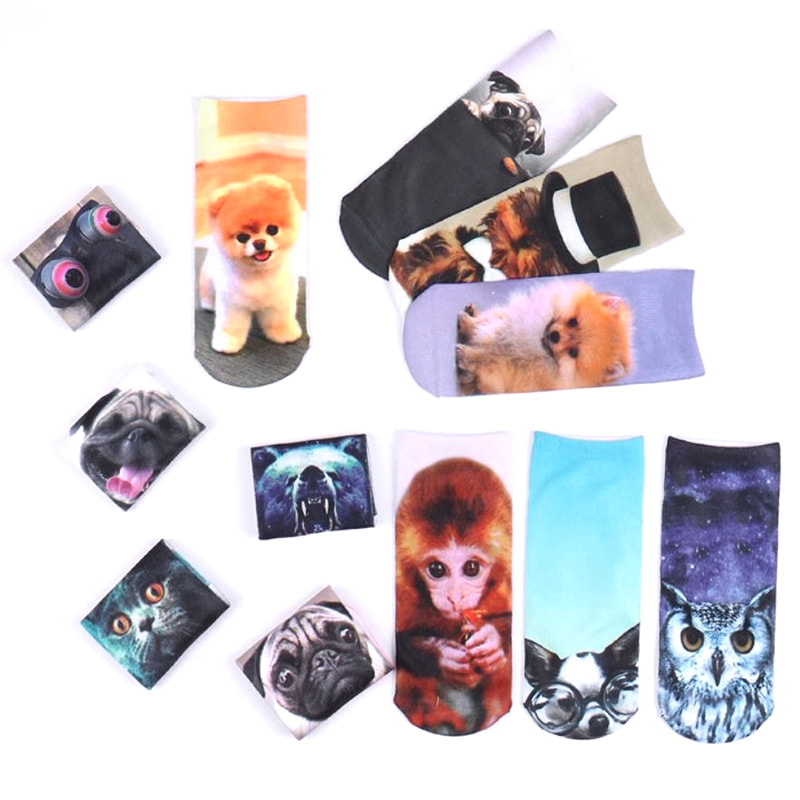
3D socks, belonging to the category of short socks, integrate European and American traditional styles with printing elements. Through 3D printing technology, unique patterns and designs are presented on the socks, making them more fashionable and personalized. The European and American traditional style usually emphasizes freedom, individuality, and avant-garde expression, with bright colors, unique patterns, and diverse printing patterns, which may include cartoons, anime, letters, numbers, geometric shapes, etc.
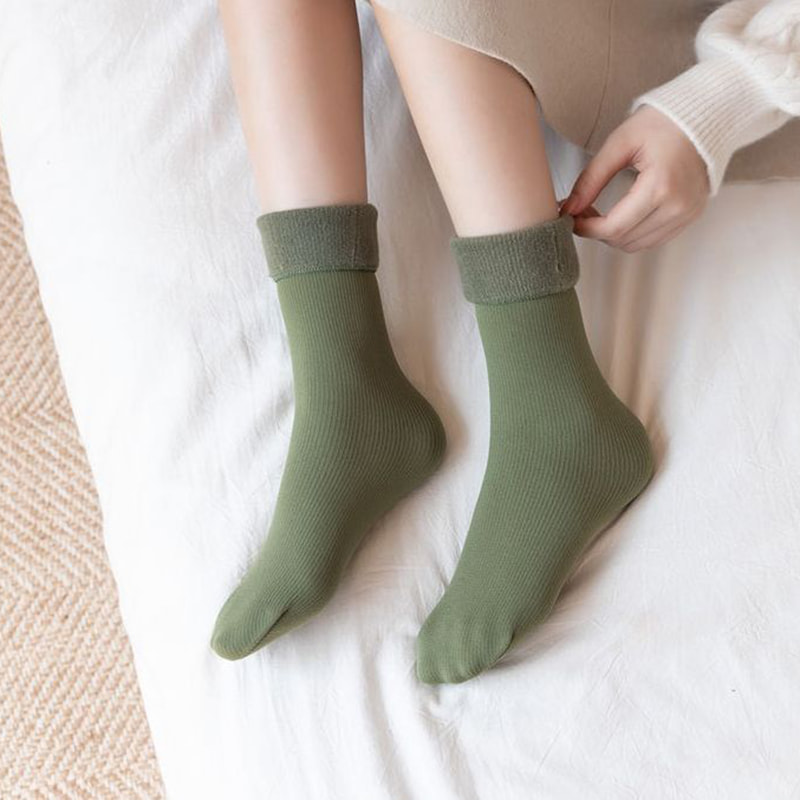
Using imitation cashmere material, this material has a soft touch like cashmere and insulation performance. The imitation cashmere fiber is delicate and can effectively lock in air, forming an insulation layer that provides long-lasting warmth for the feet. The inner layer is thickened with cashmere to ensure that even in cold weather, it can provide sufficient warmth to the feet. This design not only enhances the insulation effect but also increases the comfort of wearing, Considering that the ground may be slippery during autumn and winter seasons, the product pays special attention to anti-slip performance. By using special anti-slip materials and processing techniques, it ensures greater stability and safety when walking. The fabric of the product is wear-resistant and durable, not easy to pill or fade, and can maintain good appearance and performance even after long-term wearing and washing. It is made of highly elastic materials that can fit different foot and leg shapes without any tightness or creases when worn.
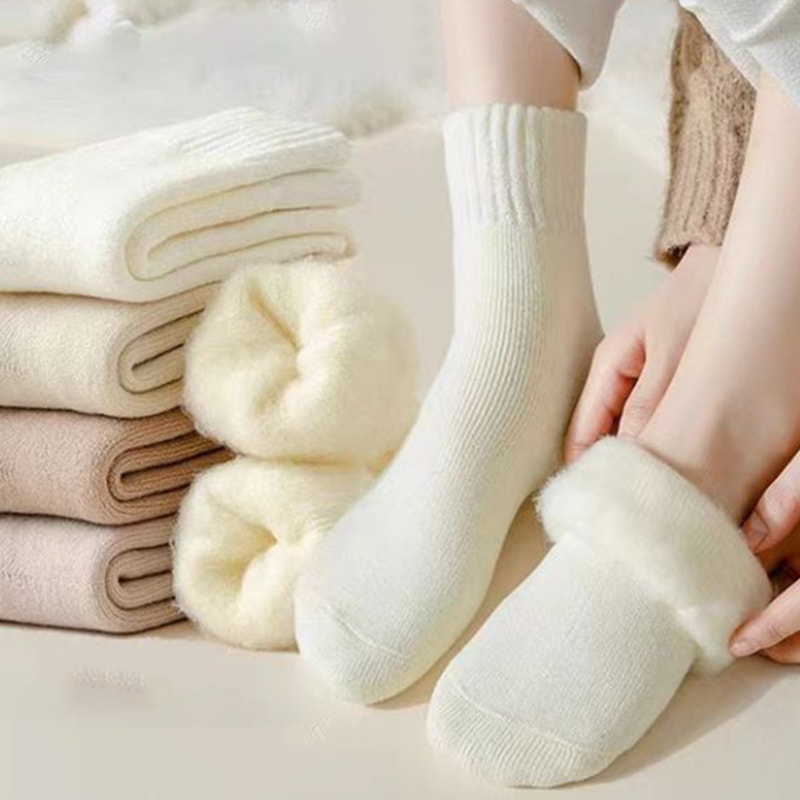
The use of a plush and thickened design can effectively isolate cold air and provide lasting warmth for the feet. The thickened plush layer not only increases warmth but also enhances wearing comfort. The surface of the socks is made of brushed loop material, which has good warmth and skin-friendliness. The brushed loop can lock in more air, form a thermal insulation layer, and reduce heat loss. The length design of the middle tube is both warm and fashionable, covering the calf area and effectively preventing cold wind invasion. At the same time, it is also convenient to pair with various autumn and winter shoe styles, such as boots, sports shoes, etc. The product also has the function of floor socks and towel socks, suitable for wearing in home environments. The soft material and comfortable touch allow the wearer to enjoy warmth and comfort at home. Special processing is used to ensure that the socks are not easily shed hair during wearing and washing, reducing inconvenience and cleaning problems caused by shedding hair.
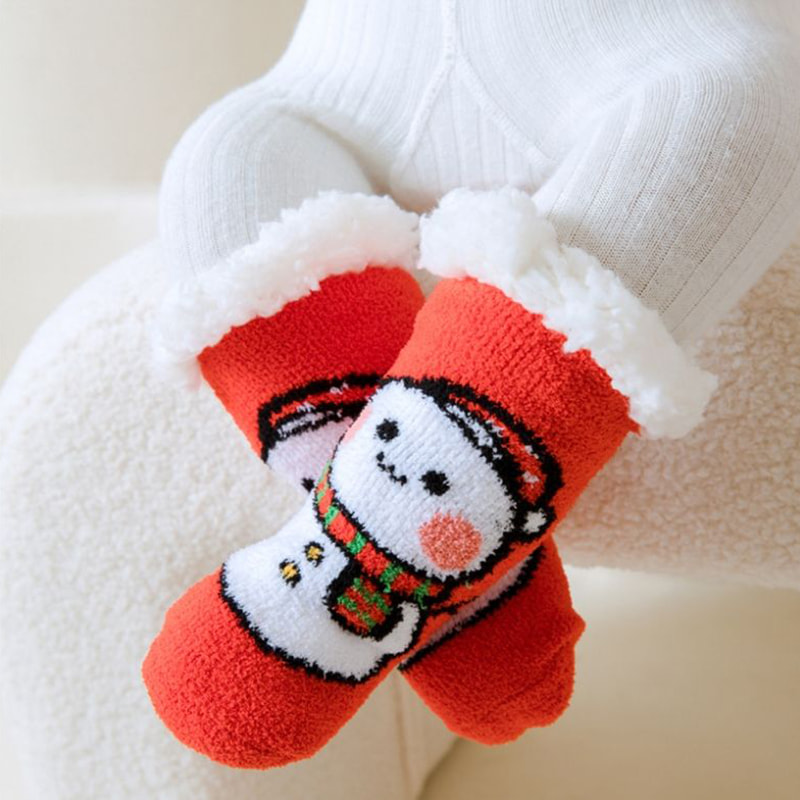
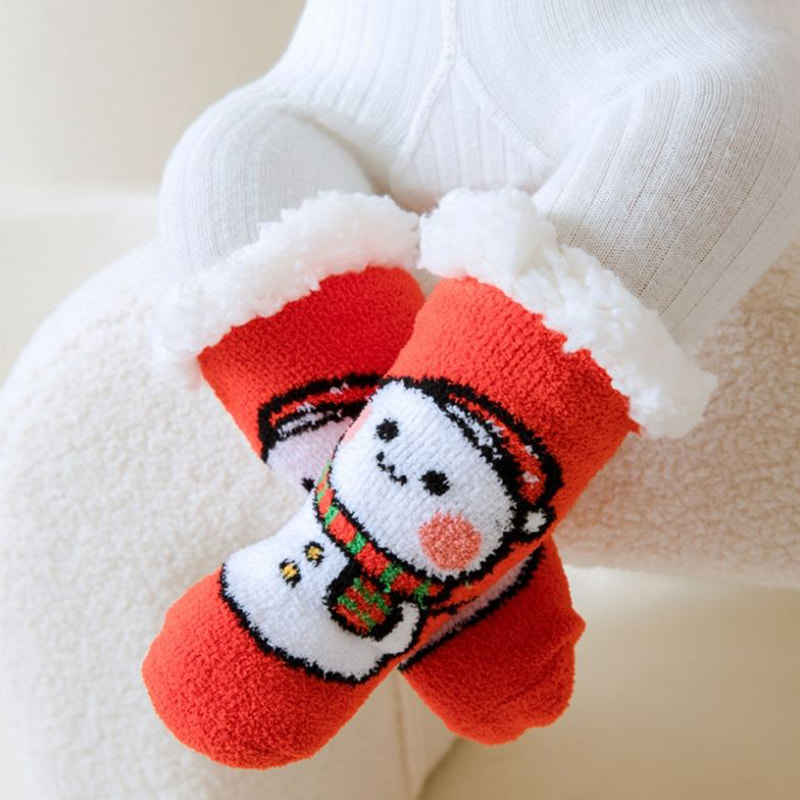
The product mainly uses coral fleece material, which is a soft, warm and skin-friendly fabric that is very suitable for babies' delicate skin. In addition, some products may also combine materials such as lamb fleece to further enhance the warmth effect. Coral fleece and lamb fleece both have good insulation performance, which can effectively lock in temperature and provide warm care for babies' feet, especially suitable for wearing in cold winter. The product incorporates rich cartoon patterns, such as Christmas-themed patterns, animal patterns, etc. These patterns are not only cute and interesting but also stimulate babies' imagination and interest.
The socks are mainly made of coral fleece or lamb fleece materials, both of which have insulation performance and are soft and skin-friendly, providing babies with a warm and comfortable wearing experience. Some products may use blended materials, such as polyester fiber (polyester), to increase the durability and breathability of the socks. The socks are printed with various cartoon patterns, such as Christmas elements (such as snowflakes, Santa Claus, reindeer, etc.), animal patterns (such as bears, rabbits, etc.), increasing the fun and cuteness of the socks, suitable for babies' aesthetics. The middle tube design can better protect babies' ankles and calves, and avoid getting cold, and floor socks are also suitable for babies to wear when playing on the floor due to their soft and nonslip material.
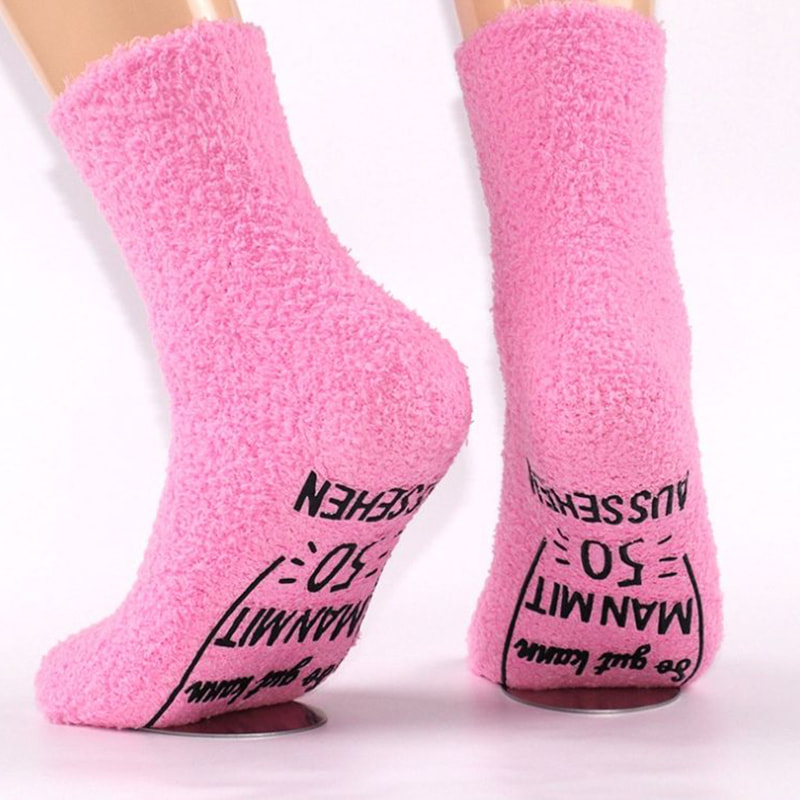
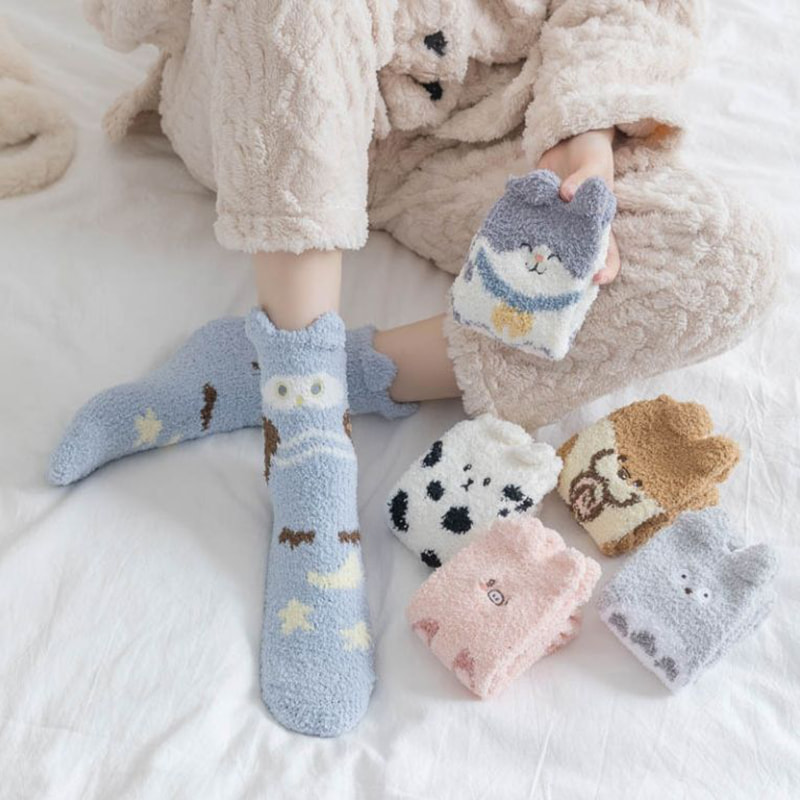
Coral fleece coarse needle adhesive socks adopt an adhesive anti-slip design at the bottom or key parts of the socks, which can increase the friction between the socks and the ground or sole, prevent slipping during walking or movement and are particularly suitable for wearing on smooth surfaces such as homes and floors. Coral fleece has long fibers and thick air layers, which have good insulation and warmth performance, suitable for wearing in cold seasons, and can effectively prevent feet from getting cold. Coral fleece has a soft and delicate texture, and comfortable touch, and can fit the skin, wrap the feet, relieve fatigue, and provide a warm and comfortable wearing experience. Coral fleece has good breathability and moisture absorption, which can absorb excess moisture from the feet and dissipate it through the pores to keep the feet dry. Coral fleece socks also have certain properties. The antibacterial and deodorizing function, Helps reduce bacterial growth and keep feet clean.
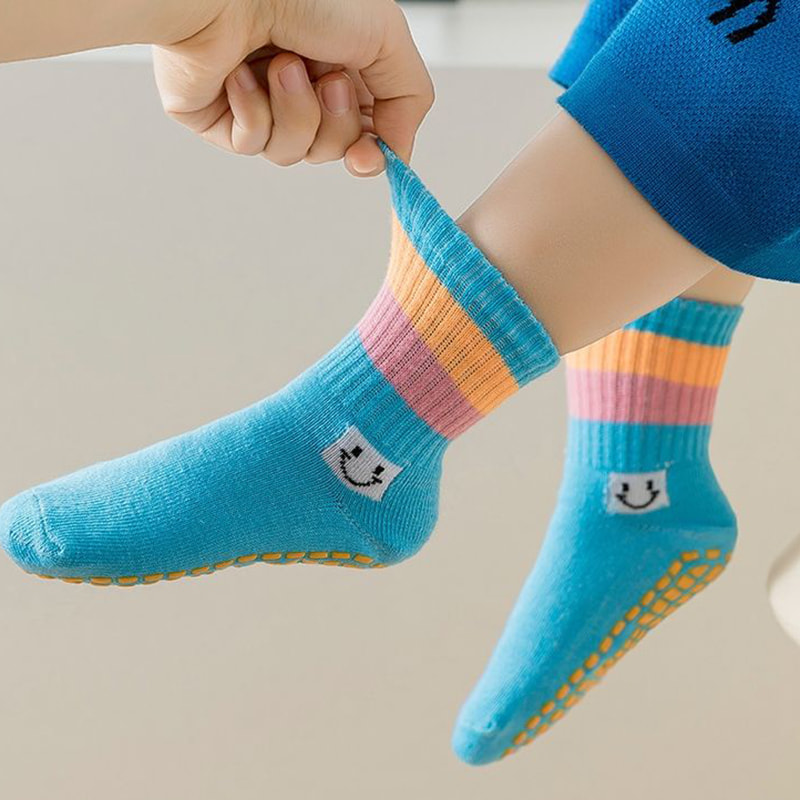
Adopting a special anti-slip design, such as an adhesive anti-slip bottom, increases friction with the ground, effectively preventing children from slipping on trampolines, slides and other equipment. The high-top design can better wrap around children's ankles, provide additional support and protection, reduce the risk of sprains, and use high-quality fabrics with good breathability and moisture absorption to keep feet dry and comfortable, avoiding stuffiness caused by long-term wear. The specially treated fabric has high wear resistance and can withstand frequent friction and pulling during children's activities.
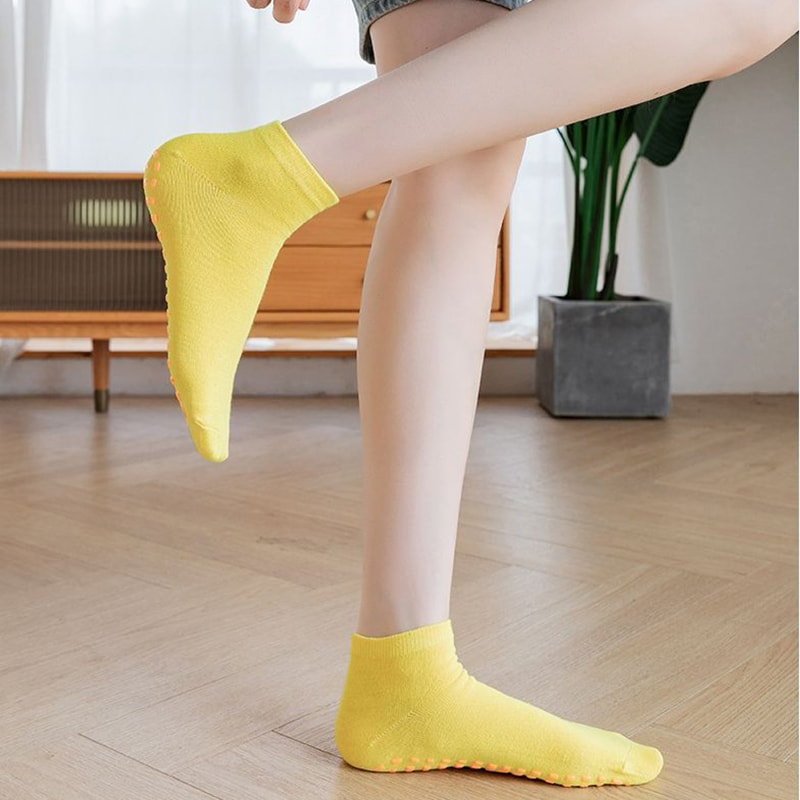
Adult yoga socks usually use special textures or materials, such as dot-shaped anti-slip particles at the bottom, which effectively prevent the practitioner from slipping during movements and protect their safety. The anti-slip particles can be embedded in the yoga mat to provide some resistance and prevent the foot from shifting under weight pressure, Yoga socks are often made of absorbent and quick-drying materials, such as soft cotton, bamboo fiber, etc., which can quickly absorb sweat from the feet, keep them dry, and have good moisture absorption and sweat-wicking performance, helping to reduce discomfort caused by wet feet and improve the exercise experience.
High-quality coral fleece material is used, which has good insulation performance and can effectively prevent feet from getting cold. The thickened design further enhances the insulation effect of the socks, even in the cold autumn and winter seasons, providing enough warmth for your feet. The coral fleece material is soft and delicate, comfortable to the touch, and will not cause irritation to the skin. It will not feel uncomfortable when worn for a long time. It has good elasticity and can fit different foot types, making it more comfortable and comfortable to wear. Coral fleece material usually has good wear resistance and is not easy to pill or deform, so this sock is relatively durable.



 English
 中文简体
中文简体 Español