Home / News / Industry News / How to Care for Men's Compression Socks: Complete Washing and Drying Guide
How to Care for Men's Compression Socks: Complete Washing and Drying Guide
Midway through a twelve hour shift you feel the top band of your compression socks roll down for the third time. The sock still covers the calf, but the pressure at the ankle feels noticeably weaker than the day you bought it. Nothing ripped and nothing snapped, yet the sock is no longer doing its job. That is how compression socks usually fail: slowly, quietly, and because of the way they are cleaned rather than the way they are worn. Caring for men's compression socks is simple once you understand what damages them. Wash them after every wear in cool water with a mild detergent, air dry them flat, store them away from heat and sunlight, and replace them when the compression begins to fade.
Compression socks work because elastic yarns are knit under tension to create graduated pressure, measured in mmHg. The elastic in a typical men's compression sock is spandex, and spandex breaks down when exposed to heat, chlorine, fabric softener, and rough mechanical action. A washing machine on a normal cycle can stretch and twist the fabric, and a tumble dryer accelerates the damage with heat. Two identical pairs of socks can therefore have completely different lives depending on how they are washed.
Effective Compression Lifespan by Care Routine
Months of usable compression before noticeable pressure loss.
Think of your care routine as a lifespan decision for every pair you own. A pair washed in the machine and dried on high heat usually loses useful compression after about three months. Moving to a delicate machine cycle and air drying adds roughly two more months. Hand washing and air drying keeps the elastic yarns stable for about seven months. If you also rotate between two or three pairs, so no single pair is worn and washed on back to back days, you can reach around nine months of effective compression. The numbers vary by brand, but the pattern is always the same: more heat and more friction shorten the life of the sock.
How Often Should You Wash Men's Compression Socks
Wash compression socks after every single wear. If you wear them five days a week for work or training, wash them five times a week. Sweat and skin oils saturate the knit during a typical eight to twelve hour wear, and those residues feed bacteria, cause odor, and attack the elastic fibers over time. A quick rinse right after removing them helps, but a full wash with mild soap is the real requirement. Do not soak socks for hours, do not use strong stain removers, and never use bleach.
These rules echo what we cover in our men's round mouth ship socks care guide, and the same principles of mild detergent and air drying apply to every pair.
Hand Washing vs Machine Washing
Both methods keep compression socks clean, but hand washing is the gentler option and should be your default. Machine washing works too if you use the cold delicate cycle and a mesh laundry bag, but it puts more stress on the fabric. The table below compares both methods at a glance.
Comparison of care methods for men's compression socks
Aspect
Hand washing
Machine washing
Water temperature
Lukewarm, below 30 C
Cold cycle
Detergent
Mild soap
Gentle detergent, no softener
Time needed
5 to 10 minutes
30 to 45 minutes
Risk of fiber damage
Low
Moderate without a bag
Best for
Daily routine care
Busy schedules
Hand washing steps
Fill a small basin with lukewarm water below 30 degrees Celsius.
Add a few drops of mild soap or a wool-safe detergent.
Submerge the socks and gently press them for three to five minutes.
Rinse with cool water until no soap remains.
Press out excess water with a towel, never wring.
Machine washing rules
Use the cold delicate or hand wash cycle.
Place the socks inside a fine mesh laundry bag.
Use a gentle detergent without brighteners.
Never use fabric softener or bleach.
Skip the spin dryer or set spin to the lowest speed.
Hand Wash vs Machine Wash on Five Practical Factors
Scores range from 1 to 5, with 5 being the best result for each factor.
The choice between hand washing and machine washing is rarely about cleaning power, because both methods get socks clean. It is about what the process does to the fabric over months of repeated washing. Hand washing scores higher on fiber gentleness because you control the pressure, and it also uses less water per wash. Machine washing wins on convenience and time saving, which is why many men rely on it during busy weeks. Cleaning power is roughly equal on both sides when you use a suitable detergent. The practical strategy is to hand wash your main pairs once or twice a week and keep a mesh laundry bag ready for the machine on busy days.
How to Dry Men's Compression Socks
Air drying is the only safe way to dry compression socks. Heat from a tumble dryer relaxes spandex and can shrink the knit, permanently changing the fit and the pressure profile. Direct sunlight and radiator heat are just as damaging because UV rays and high temperatures attack the same elastic structures. Lay the socks flat on a clean towel, reshape them gently to their original length, and leave them at room temperature. They usually dry overnight. Never hang them by the toe or the top band, because the weight of the water stretches the fabric while it dries.
Elasticity Retention After 30 Washes by Water Temperature
Values show the percentage of original elasticity remaining in the yarn.
Water temperature is the single most controllable factor in preserving compression. This chart shows how much elastic recovery remains after thirty wash cycles at five different temperatures. A 20 degree wash keeps about 95 percent of the original elasticity, which is why cold water is the safe default. At 30 degrees, the temperature most people use for hand washing, the retention is still strong at about 90 percent. Problems start at 40 degrees, where elasticity falls to roughly 82 percent. Hot washes at 60 degrees push retention below 65 percent, and at 90 degrees nearly two thirds of the elastic performance is gone. If the water feels hot on your hand, it is too hot for your compression socks.
Storage, Rotation, and Daily Handling
How you store a sock between washes matters as much as how you wash it. Keep compression socks flat or rolled loosely in a cool dry drawer, away from direct sunlight and heating vents. Do not fold them over a hanger or stretch the top band over a hook, because a crease under tension weakens the elastic at that point. Rotating between at least two pairs gives each pair a full day to recover and is one of the cheapest ways to extend their life. For daily handling, trim toenails short and smooth, remove rings and watches before putting socks on, and pull them on gently instead of yanking the fabric.
When to Replace Men's Compression Socks
Even with perfect care, a compression sock has a finite life. The standard recommendation is to replace a daily worn pair every six months, and a pair worn two or three times a week can last up to twelve months. Do not wait for a hole to appear. The signs of failure are a top band that no longer grips, fabric that feels noticeably thinner, a sock that slides down during the day, and a loss of the pressure gradient between ankle and calf. When you notice any of these, the sock has already lost most of its clinical benefit.
Compression Retention Over 12 Months
Percentage of original rated compression retained over time.
The loss of compression is easy to miss because it happens over months rather than days. This chart tracks two identical pairs of men's compression socks over a twelve month period. The carefully washed pair holds about 97 percent of its original compression at three months and stays above 85 percent at twelve months. The neglected pair, washed hot and dried with heat every time, drops to about 90 percent at three months and falls to roughly 58 percent by the end of the year. At that level the sock performs like an ordinary dress sock, which defeats the purpose of wearing it. A six to nine month replacement schedule is therefore a reasonable policy for anyone who wears compression socks daily.
When you replace your current pair, choose a model with antibacterial yarns and strong graduated pressure, because those features resist odor and survive regular washing better.
Using fabric softener, which coats the elastic yarns and reduces their grip.
Adding bleach or oxygen-based stain removers, which attack the dye and the fiber.
Washing in hot water or drying with heat.
Wringing or twisting the socks to remove water.
Folding the top band over itself for storage.
Wearing the same pair two days in a row without washing.
Wearing them all night; most men should remove compression socks before sleep unless a doctor advises otherwise.
Ignoring small snags, which can turn into runs and holes quickly.
Many of these mistakes are avoidable once you know them, and a sock built with quality yarns is more forgiving. When you evaluate a new pair, check the care label and the yarn composition before you buy. For active use, look for a sports compression sock designed for running and fitness, since those models are usually constructed to survive frequent washing.
Here is the full routine in one paragraph. After wearing your socks, hand wash them in cool water with mild soap, or machine wash them in a mesh bag on the cold delicate cycle. Air dry them flat, never in a dryer and never in direct sunlight. Store them loosely rolled in a cool drawer, and rotate between two pairs if you wear them daily. Inspect the top band and the fabric every few weeks, and replace the socks when the compression fades or the fabric gets thin. That routine takes about ten minutes of active time per week and extends the life of a good pair from a few months to close to a year. If you are sourcing socks for yourself or for retail, a manufacturer like BoLong Socks publishes clear material and care specifications that make it easier to choose the right product.
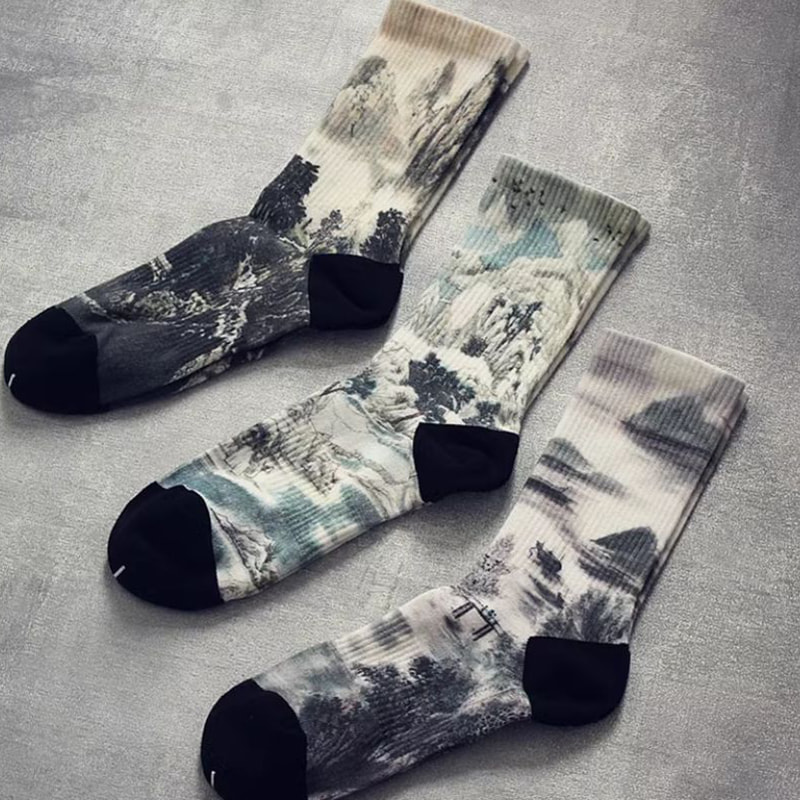
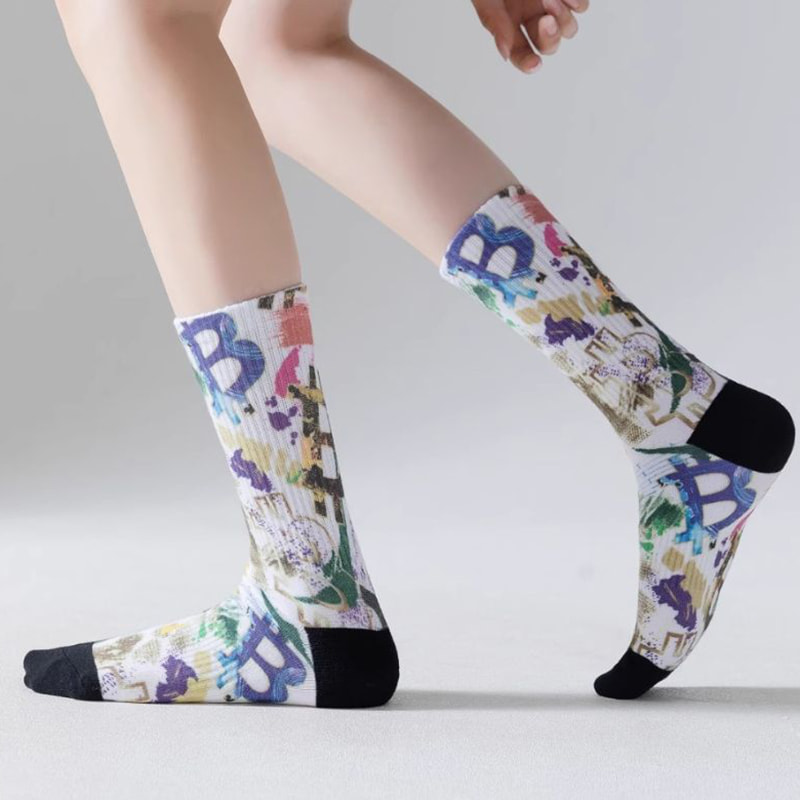
By combining traditional Chinese elements with modern trends and showcasing a strong Chinese style through unique designs, this design style not only meets the personalized needs of young people today but also adds a unique cultural charm to daily wear. Advanced 3D printing technology is used to make the patterns and textures on the socks more three-dimensional and vivid. This technology not only improves the precision and clarity of the patterns but also makes the socks more recognizable and fashionable. As mid-length socks, their length is moderate, which can protect the ankles from the cold invasion of spring and autumn seasons, and will not be too hot and humid. At the same time, the weather changes in spring and autumn seasons are varied, and this sock can adapt well to these changes, providing a comfortable wearing experience for the feet. The printed on the socks The patterns are rich and diverse, It can be traditional Chinese patterns such as mountains and waters, flowers and birds, dragons and phoenixes, or creative patterns that combine modern trendy elements.
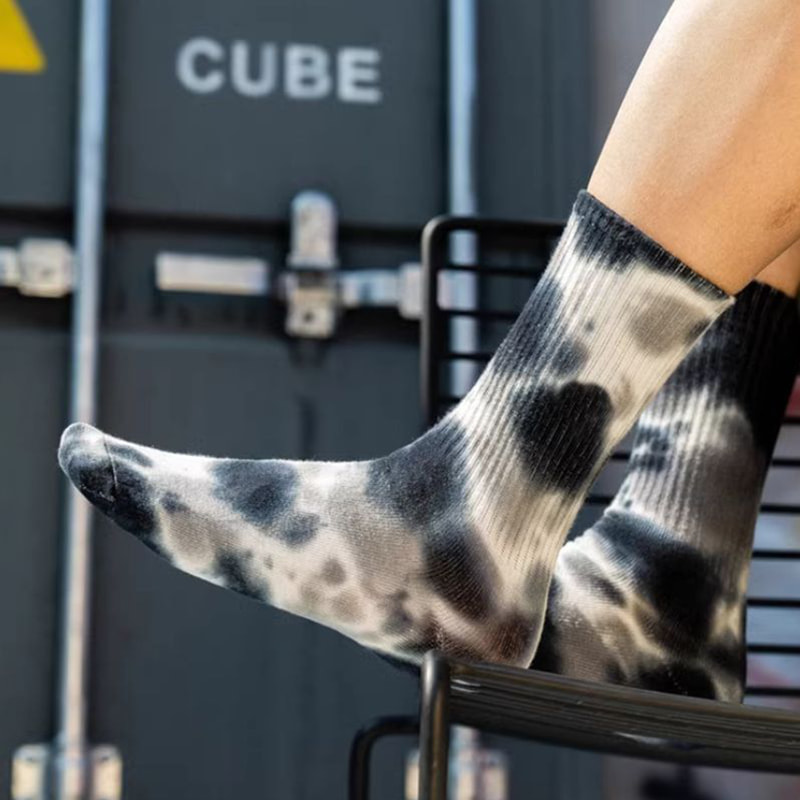
American tie dye is a unique dyeing process that uses specific tying and dyeing techniques to create a rich and colorful pattern and color gradient effect on socks, increasing the fashion sense and personalization of the product, Designed with a mid-length, it is suitable for sports wear such as basketball, providing sufficient wrapping and protecting the ankle from sprains and other injuries. The bottom is designed with a thick towel, which has moisture-wicking performance and can quickly absorb sweat from the feet, keeping them dry and comfortable, and reducing sliding and friction during exercise. The sock body may have a looped design to increase the thickness and warmth of the socks, while improving the comfort and softness of wearing. Made of pure cotton material, pure cotton has good breathability and skin friendliness, reducing foot odor and bacterial growth, and maintaining foot health. The product may incorporate popular INS style elements, such as color matching and pattern design, to make it more in line with the aesthetic needs of young consumers.
Adopting advanced 3D printing technology, the patterns present a strong sense of three-dimensionality and layering, making the socks more fashionable and unique. The patterns are bright and durable, not easy to fade, and maintain the appearance of the socks as new for a long time. There are rich pattern choices, including European and American street styles, sports elements, graffiti art, etc., to meet the personalized needs of different consumers. High-quality cotton materials are selected, with a soft touch and skin-friendly comfort. The cotton material has good breathability, keeping the feet dry, reducing bacterial growth, quickly absorbing and discharging foot moisture, keeping the feet dry and comfortable, suitable for wearing in spring and summer seasons. The socks have good elasticity, can closely fit different foot shapes, and reduce friction and discomfort during exercise.
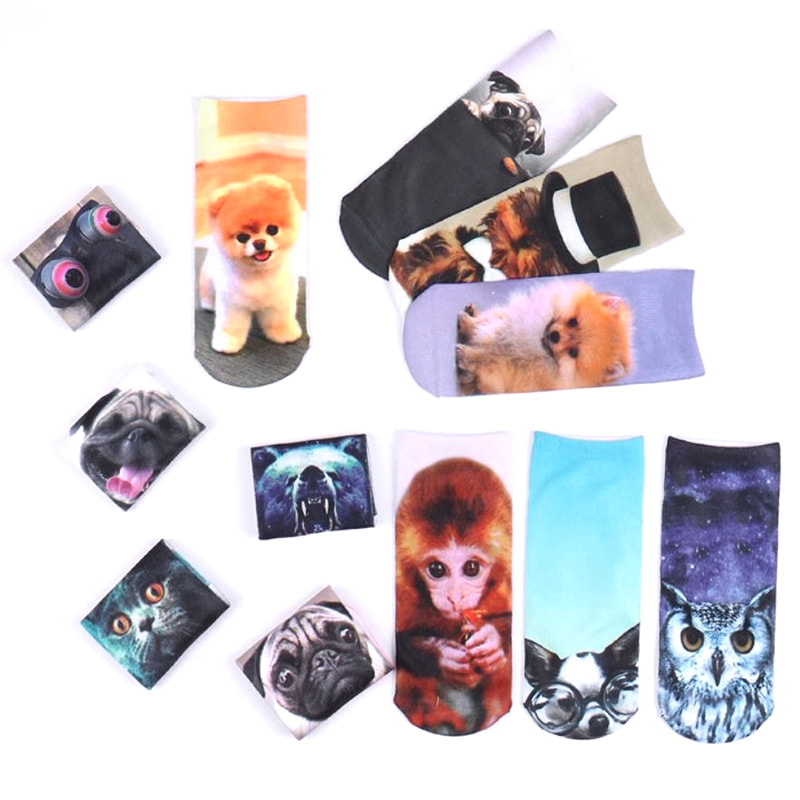
3D socks, belonging to the category of short socks, integrate European and American traditional styles with printing elements. Through 3D printing technology, unique patterns and designs are presented on the socks, making them more fashionable and personalized. The European and American traditional style usually emphasizes freedom, individuality, and avant-garde expression, with bright colors, unique patterns, and diverse printing patterns, which may include cartoons, anime, letters, numbers, geometric shapes, etc.
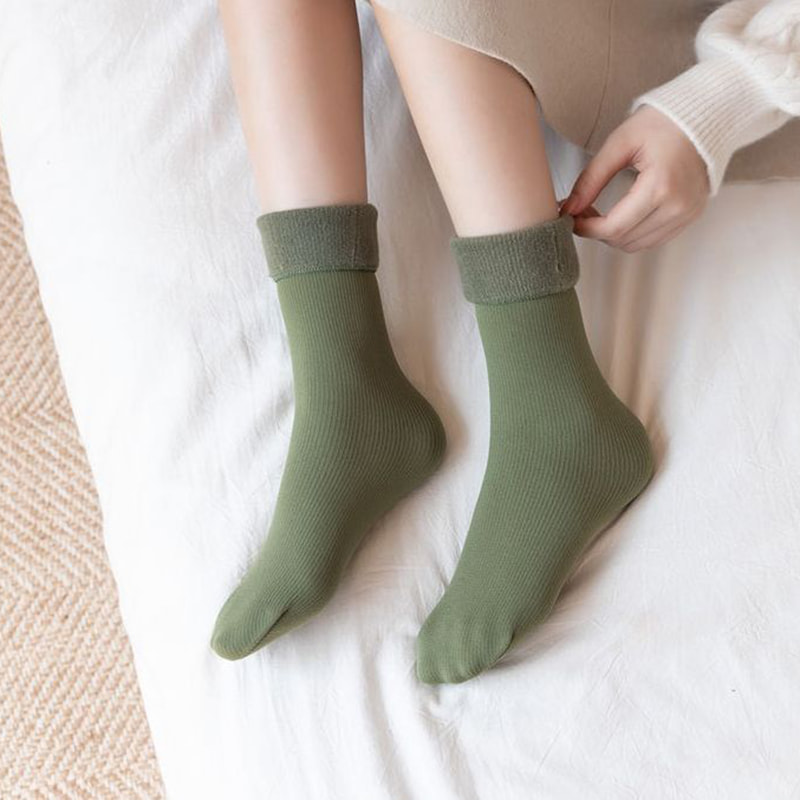
Using imitation cashmere material, this material has a soft touch like cashmere and insulation performance. The imitation cashmere fiber is delicate and can effectively lock in air, forming an insulation layer that provides long-lasting warmth for the feet. The inner layer is thickened with cashmere to ensure that even in cold weather, it can provide sufficient warmth to the feet. This design not only enhances the insulation effect but also increases the comfort of wearing, Considering that the ground may be slippery during autumn and winter seasons, the product pays special attention to anti-slip performance. By using special anti-slip materials and processing techniques, it ensures greater stability and safety when walking. The fabric of the product is wear-resistant and durable, not easy to pill or fade, and can maintain good appearance and performance even after long-term wearing and washing. It is made of highly elastic materials that can fit different foot and leg shapes without any tightness or creases when worn.
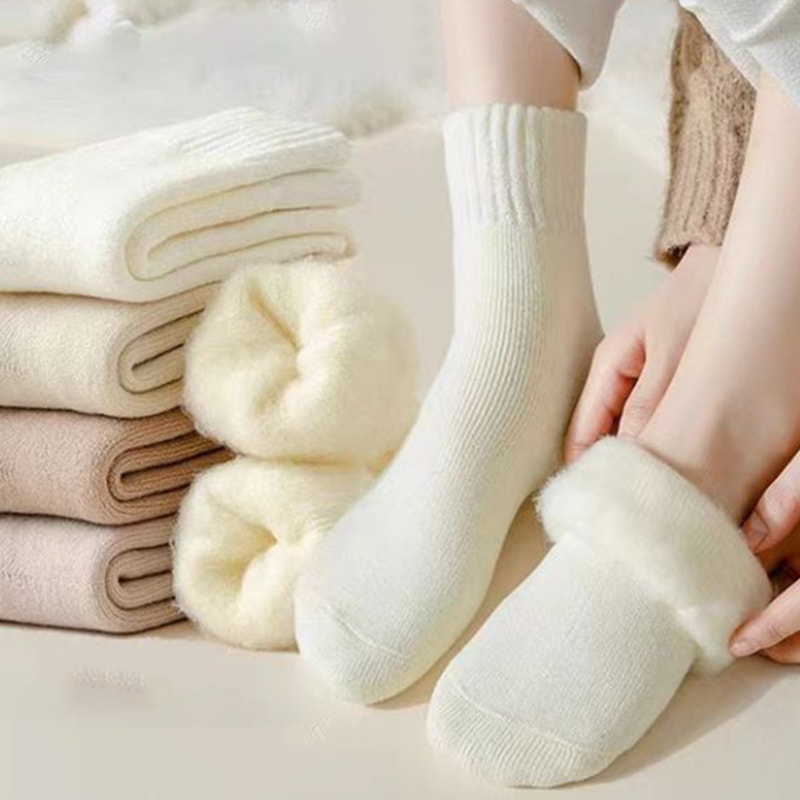
The use of a plush and thickened design can effectively isolate cold air and provide lasting warmth for the feet. The thickened plush layer not only increases warmth but also enhances wearing comfort. The surface of the socks is made of brushed loop material, which has good warmth and skin-friendliness. The brushed loop can lock in more air, form a thermal insulation layer, and reduce heat loss. The length design of the middle tube is both warm and fashionable, covering the calf area and effectively preventing cold wind invasion. At the same time, it is also convenient to pair with various autumn and winter shoe styles, such as boots, sports shoes, etc. The product also has the function of floor socks and towel socks, suitable for wearing in home environments. The soft material and comfortable touch allow the wearer to enjoy warmth and comfort at home. Special processing is used to ensure that the socks are not easily shed hair during wearing and washing, reducing inconvenience and cleaning problems caused by shedding hair.
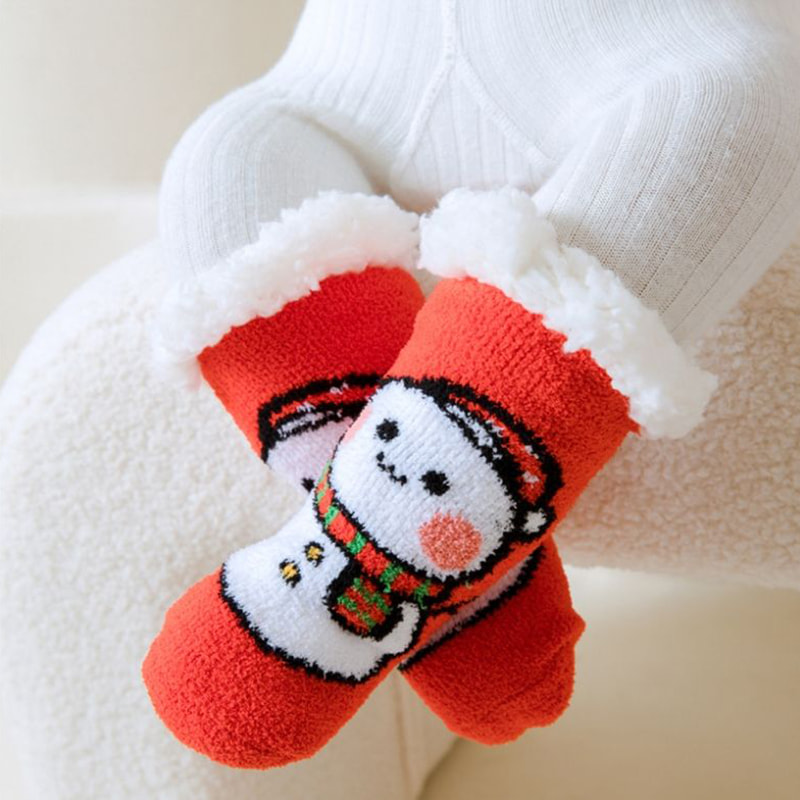
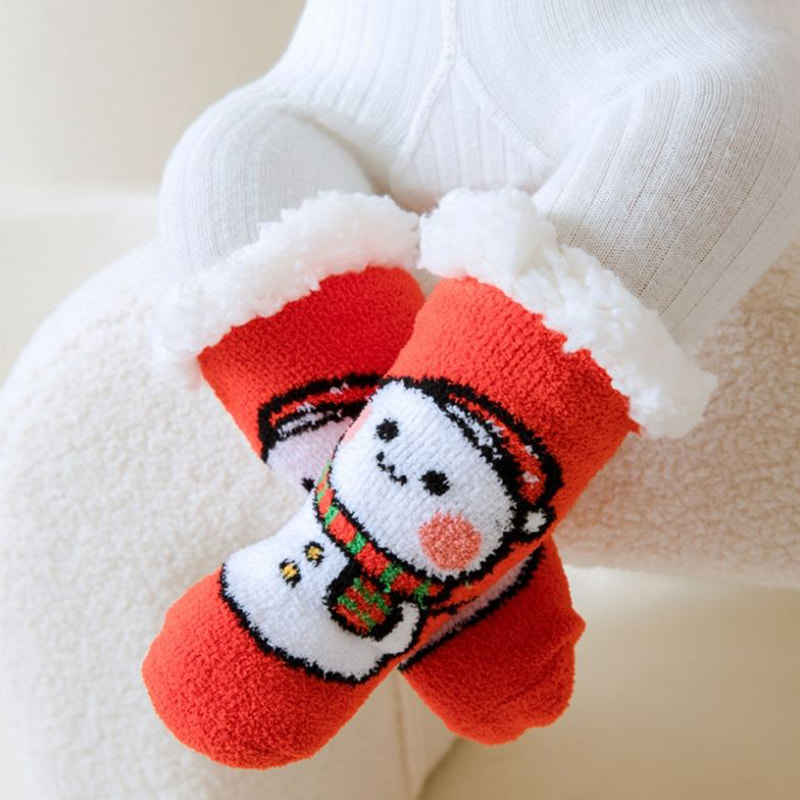
The product mainly uses coral fleece material, which is a soft, warm and skin-friendly fabric that is very suitable for babies' delicate skin. In addition, some products may also combine materials such as lamb fleece to further enhance the warmth effect. Coral fleece and lamb fleece both have good insulation performance, which can effectively lock in temperature and provide warm care for babies' feet, especially suitable for wearing in cold winter. The product incorporates rich cartoon patterns, such as Christmas-themed patterns, animal patterns, etc. These patterns are not only cute and interesting but also stimulate babies' imagination and interest.
The socks are mainly made of coral fleece or lamb fleece materials, both of which have insulation performance and are soft and skin-friendly, providing babies with a warm and comfortable wearing experience. Some products may use blended materials, such as polyester fiber (polyester), to increase the durability and breathability of the socks. The socks are printed with various cartoon patterns, such as Christmas elements (such as snowflakes, Santa Claus, reindeer, etc.), animal patterns (such as bears, rabbits, etc.), increasing the fun and cuteness of the socks, suitable for babies' aesthetics. The middle tube design can better protect babies' ankles and calves, and avoid getting cold, and floor socks are also suitable for babies to wear when playing on the floor due to their soft and nonslip material.
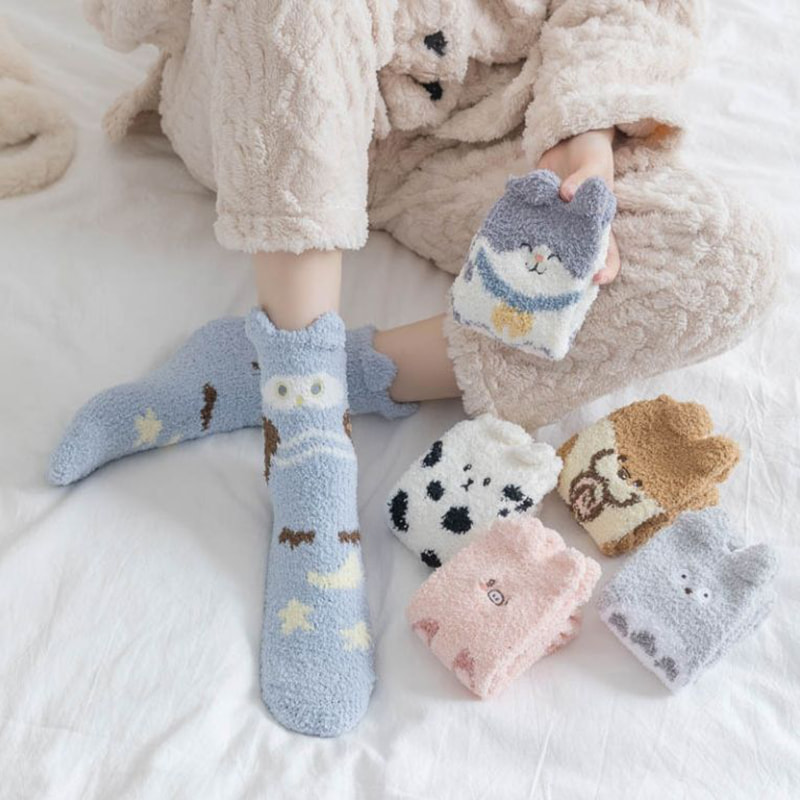
Coral fleece coarse needle adhesive socks adopt an adhesive anti-slip design at the bottom or key parts of the socks, which can increase the friction between the socks and the ground or sole, prevent slipping during walking or movement and are particularly suitable for wearing on smooth surfaces such as homes and floors. Coral fleece has long fibers and thick air layers, which have good insulation and warmth performance, suitable for wearing in cold seasons, and can effectively prevent feet from getting cold. Coral fleece has a soft and delicate texture, and comfortable touch, and can fit the skin, wrap the feet, relieve fatigue, and provide a warm and comfortable wearing experience. Coral fleece has good breathability and moisture absorption, which can absorb excess moisture from the feet and dissipate it through the pores to keep the feet dry. Coral fleece socks also have certain properties. The antibacterial and deodorizing function, Helps reduce bacterial growth and keep feet clean.
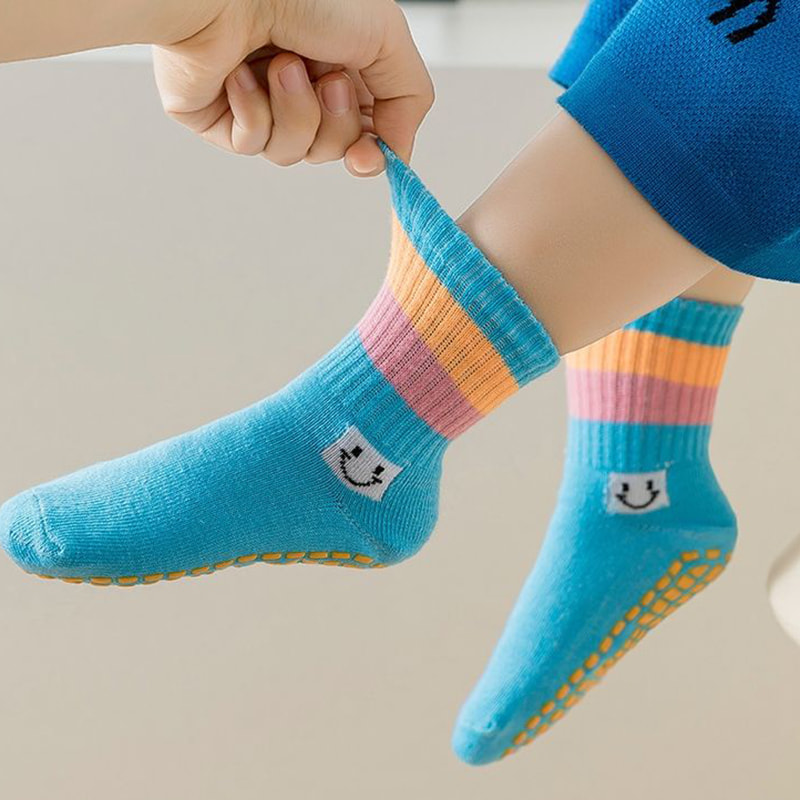
Adopting a special anti-slip design, such as an adhesive anti-slip bottom, increases friction with the ground, effectively preventing children from slipping on trampolines, slides and other equipment. The high-top design can better wrap around children's ankles, provide additional support and protection, reduce the risk of sprains, and use high-quality fabrics with good breathability and moisture absorption to keep feet dry and comfortable, avoiding stuffiness caused by long-term wear. The specially treated fabric has high wear resistance and can withstand frequent friction and pulling during children's activities.
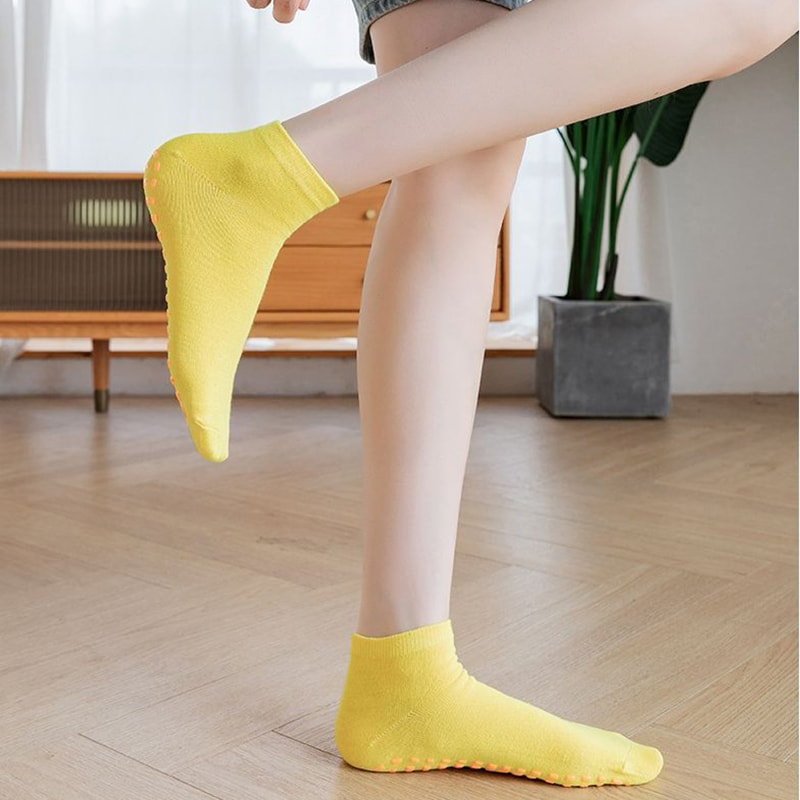
Adult yoga socks usually use special textures or materials, such as dot-shaped anti-slip particles at the bottom, which effectively prevent the practitioner from slipping during movements and protect their safety. The anti-slip particles can be embedded in the yoga mat to provide some resistance and prevent the foot from shifting under weight pressure, Yoga socks are often made of absorbent and quick-drying materials, such as soft cotton, bamboo fiber, etc., which can quickly absorb sweat from the feet, keep them dry, and have good moisture absorption and sweat-wicking performance, helping to reduce discomfort caused by wet feet and improve the exercise experience.
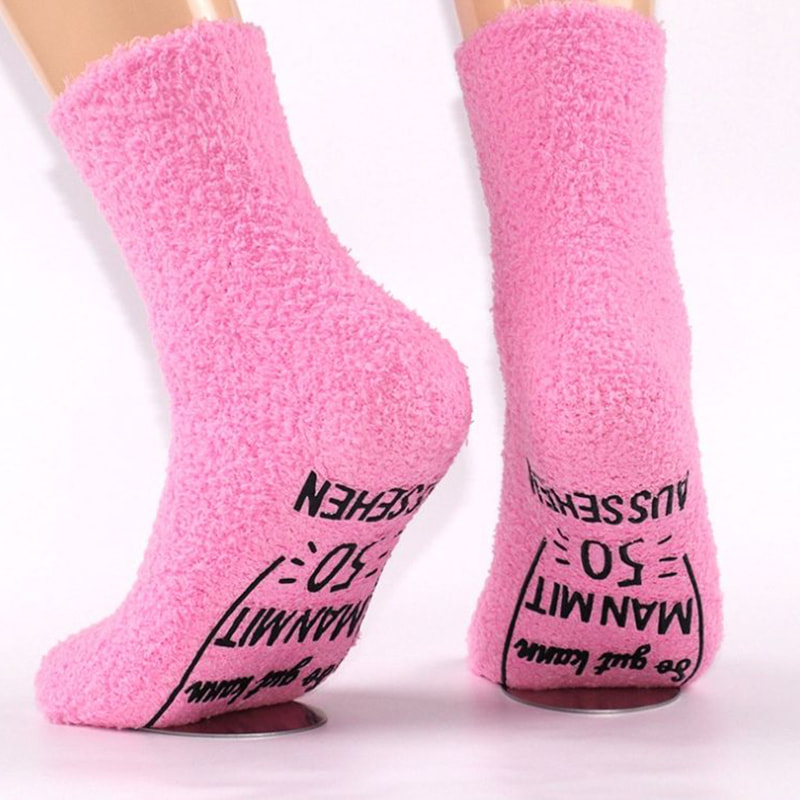
High-quality coral fleece material is used, which has good insulation performance and can effectively prevent feet from getting cold. The thickened design further enhances the insulation effect of the socks, even in the cold autumn and winter seasons, providing enough warmth for your feet. The coral fleece material is soft and delicate, comfortable to the touch, and will not cause irritation to the skin. It will not feel uncomfortable when worn for a long time. It has good elasticity and can fit different foot types, making it more comfortable and comfortable to wear. Coral fleece material usually has good wear resistance and is not easy to pill or deform, so this sock is relatively durable.



 English
 中文简体
中文简体 Español