A Monday morning meeting, a drawer holding four pairs of dress socks, and one of those pairs already showing a thin heel. That is usually the moment the question comes up: how many men's dress socks should you own? The practical answer is 14 to 20 pairs for a normal working wardrobe. About 10 of them form the daily rotation, and the rest absorb laundry day, travel, and the slow retirement of socks that wear out.
That number is not a style rule. It follows from how often you wear dress socks, how often you do laundry, and how quickly a thin knit loses its shape. Get the count roughly right and you stop washing socks late on Sunday night, and every pair lasts longer because it is worn less often.
The Short Answer: 14 to 20 Pairs for Most Working Men
For a man who wears dress socks four or five days a week and does laundry once a week, 14 to 20 pairs covers everything comfortably. Here is how that total breaks down.
- Core rotation: 10 pairs in the colors you actually wear, enough for two weeks of dress days without a rush wash.
- Laundry buffer: 3 to 5 pairs that stay clean while another batch is being washed or dried.
- Travel and desk drawer: 2 to 3 pairs kept aside for trips, a gym locker, or an office drawer.
- Seasonal pairs: 2 to 4 lighter or warmer pairs for hot summers and cold offices.
Below 10 pairs, the rotation becomes tight. Every pair is worn more often, washed more often, and pulled back into service before it has fully dried, which is exactly when heels thin out and cuffs give up.
The Laundry Math Behind the Number
A simple formula covers most households: the pairs you need equals your dress sock days per week multiplied by two, plus four.
- Count how many days a week you actually wear dress socks, not how many days you work.
- Double it. One set is on your feet or in the laundry basket, the other set is clean in the drawer.
- Add four pairs as a buffer for a missed laundry day, a business trip, or a damaged pair.
Five dress days a week gives 5 multiplied by 2, plus 4, which is 14 pairs. Three dress days a week gives 10 pairs. If your laundry runs every two weeks instead of weekly, add another 5 pairs, because the dirty set keeps growing while the clean set shrinks.
How Many Pairs Different Work Patterns Need
The right total shifts with your schedule, your dress code, and how much you travel. The table below gives workable starting points.
Recommended pair counts assume a weekly laundry cycle and a small reserve for travel and replacement.
| Work pattern |
Dress sock days per week |
Pairs to own |
Why |
| Formal suits five days a week, plus evening events |
5 to 6 |
20 to 24 |
Two laundry loads a week and little drying time between wears |
| Business casual office, five days a week |
4 to 5 |
14 to 16 |
Comfortable rotation with room for a missed wash |
| Hybrid schedule, two or three office days |
2 to 3 |
8 to 10 |
Fewer wears per pair, so a longer service life |
| Remote work with occasional client meetings |
1 to 2 |
6 to 8 |
Small rotation, but socks still age in storage |
| Frequent travel with hotel laundry |
4 to 5 |
18 to 20 |
Lost pairs and short hotel wash cycles add up |
Why Dress Socks Wear Out Faster Than You Expect
Dress socks are the thinnest socks most men own. Thin yarn, a snug dress shoe, and a full day of walking concentrate friction on the heel and the ball of the foot. A pair worn once a week collects roughly 50 wears a year, and many fine gauge dress socks reach the end of their useful life somewhere between 40 and 60 wears.
That is the hidden reason a small drawer feels expensive. Ten pairs rotating weekly means each pair approaches 50 wears within a year, so several pairs need replacing at the same time. Twenty pairs halves the annual wear per pair and spreads the replacement cost over two years instead of one.
Stretching a pair past that point shows up in predictable ways: the heel turns translucent when held to the light, the cuff stops staying above the ankle bone, and the foot bed feels slick inside the shoe.
Material Choices and How They Change the Count
How long a rotation lasts depends heavily on fiber and knit density. A denser knit with a small share of elastane keeps its shape longer than a loose, thin weave, and the fiber decides how the sock handles heat, moisture, and washing.
Material performance is a general guide. Actual wear depends on shoe fit, walking distance, and how the socks are washed and dried.
| Material |
Breathability |
Durability |
Where it fits |
| Combed cotton |
Good |
Good |
Spring and autumn daily wear |
| Mercerized cotton |
Moderate |
Good, holds color well |
Year round office rotation |
| Wool blend |
High |
Very good |
Winter, cold offices, long days on your feet |
| Bamboo or viscose blend |
High |
Moderate |
Warm and humid climates |
| Cotton with elastane |
Moderate |
Depends on knit density |
Better fit, but keep them out of a hot dryer |
Building the Rotation Without Overspending
A 20 pair drawer does not have to arrive in one order. Most men are better served by building it in stages, starting with the plain colors that match everything.
Buy six pairs in one dark color, wear them for a month, and notice which ones you reach for first. Then add a second color, and only after that introduce pattern. A rotation built from charcoal, navy, black, and mid grey covers suits, chinos, and dark denim without a mismatched morning. It also makes replacement simple, because a fading pair can be retired without disturbing the rest of the drawer. Solid color socks in combed cotton are a sound first layer for spring and autumn wear.
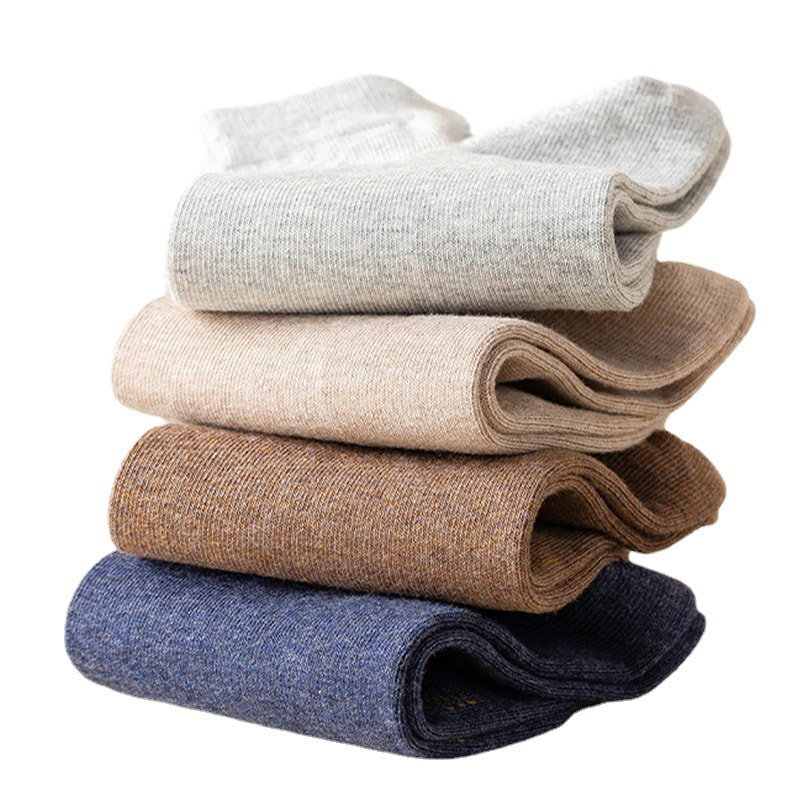 Spring and Autumn Combed Cotton Solid Color Men's SocksCombed cotton solid color socks for spring and autumn, breathable and moisture-absorbing; a simple first layer for building a dark-color rotation.View Product →
If you would rather buy the base layer in one step, a men's mid length socks collection gives you several plain colors in a single order. Start there and add seasonal pairs later.
Climate, Shoe Style, and Seasonal Adjustments
Climate and footwear change the count more than dress code does. Two adjustments cover most men.
- Warm months: add four to six thin cotton or bamboo pairs. Expect to wash them more often because they are worn on the hottest days.
- Cold months: add four to six wool blend or heavier cotton pairs. These take longer to dry, so the laundry buffer needs to be larger.
Shoe choice matters too. Loafers and low cut dress shoes work with invisible or shallow styles, while boots and high vamp shoes need a longer sock that does not slide down during the day. A mid length wool blend sock handles a winter office and a long commute without adding bulk inside the shoe.
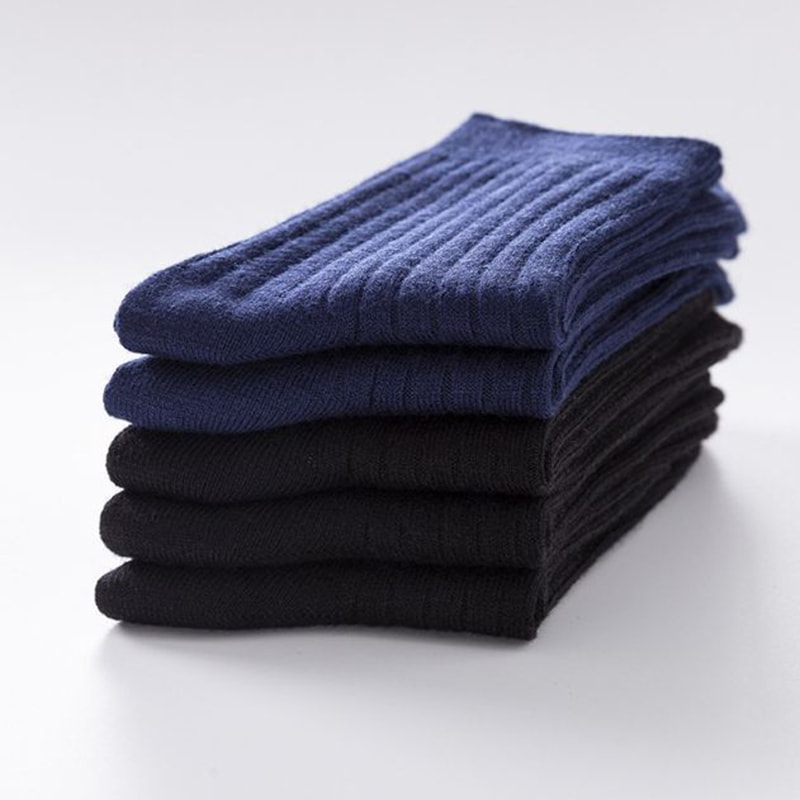 Men's Mid Length Woolen Socks for Autumn and WinterMid-calf woolen socks for autumn and winter, warm and moisture-wicking with elastic cuffs that suit boots and winter commutes.View Product →
Care Rules That Protect the Count
Washing decisions quietly determine how long 20 pairs will last. Three habits do most of the work.
- Turn socks inside out and wash them in warm water, not hot. Heat breaks down elastane and dulls dark dye.
- Skip the dryer when you can. Line drying keeps cuffs elastic and stops the knit from tightening unevenly.
- Rotate in order. Wearing the same two pairs every week wears them out while the rest sit untouched.
Lint, pilling, and a slightly stiff foot bed are early warnings. Our care and maintenance guidance for fine knit socks explains wash temperature, drying position, and storage in more detail, and the same principles apply to any dress sock in the drawer.
Replacing Pairs and Filling Gaps
Even a well managed 20 pair rotation needs a replacement plan. Check the drawer twice a year, at the start of spring and the start of autumn, and pull any pair that fails three simple tests.
- The heel or toe becomes see through when you hold it up to a light.
- The cuff no longer stays above the ankle bone after an hour of wear.
- The color has faded noticeably compared with a newer pair of the same shade.
Replace two to four pairs at a time rather than one, so the drawer stays consistent and you are not hunting for a matching weight halfway through the week. A men's business socks gift box works well here, whether you are restocking the plain colors you wear most or giving a set to someone who is still building a rotation.
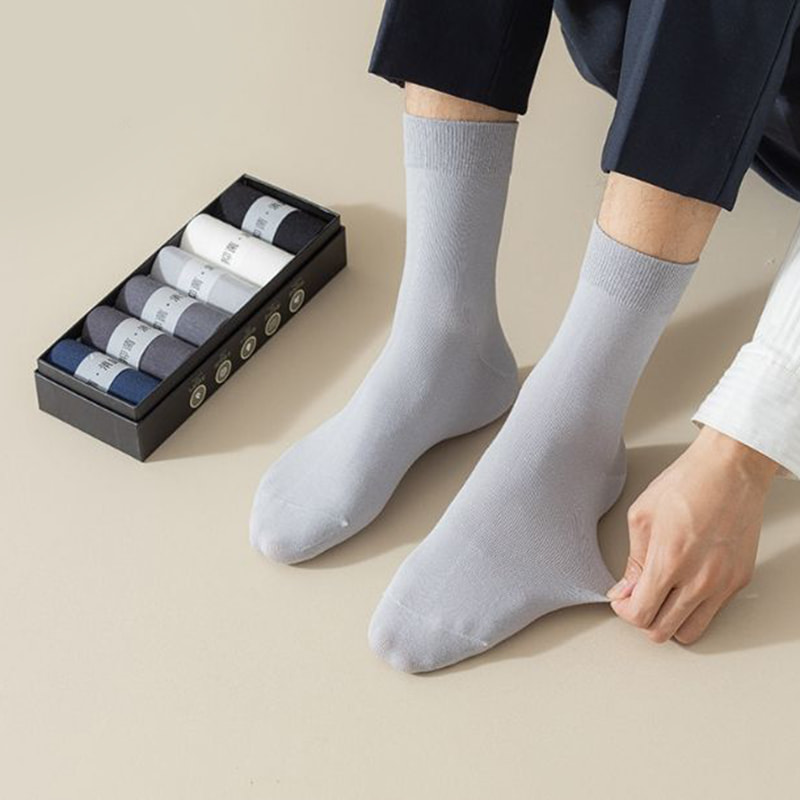 Men's Business Socks Gift Box for Restocking or GiftingA multi-pair business sock gift box with mid-length, breathable blended fabric, useful for restocking a rotation or giving a practical set.View Product →
Fourteen to 20 pairs is the working range for most men, and the number moves with your schedule. Five dress days a week points to 14 or more, two office days points to 8 or 10. The goal is not a large drawer. It is a rotation in which every pair is washed properly, worn less often, and replaced before it fails on a morning when you have no time to think about socks.
Start with a count, add plain colors first, and let the drawer grow as your laundry habits and your seasons demand. That way the answer stays simple, and Monday mornings stay quiet.



 English
 中文简体
 Español